Updated for 2026
The quick version: Plaza Botero is a free public square in downtown Medellín with 23 large bronze sculptures by Fernando Botero. The plaza itself takes about 30 to 45 minutes, but the visit is much better when you also go inside the Museo de Antioquia and walk through the nearby Palacio de la Cultura. Take the Metro to Parque Berrío, visit during the day and keep your phone away when you are not using it.
Plaza Botero is one of those places that looks calmer in photographs than it feels in real life. The square is busy, noisy and surrounded by the everyday movement of downtown Medellín. There are vendors, commuters, tourists, street performers and people passing through in every direction.
That is not necessarily a bad thing. The contrast between the bronze sculptures and the crowded center is part of what makes the place interesting. I have lived in Medellín since 2018, and I still think the plaza deserves a place on a first visit. I just would not treat it as a quick photo stop. The Museo de Antioquia next door is what gives the sculptures context and turns the area into a worthwhile half-day plan.
Table of Contents
Plaza Botero at a glance
| Question | Practical answer |
| Is the plaza free? | Yes. The outdoor sculptures are in a public square. The Museo de Antioquia charges admission. |
| How much time do you need? | About 30–45 minutes for the plaza, or 2–3 hours with the museum and nearby buildings. |
| Best time to visit | A weekday morning or early afternoon. The center becomes less comfortable later in the day. |
| Closest Metro station | Parque Berrío on Line A. The plaza is only a short walk from the station. |
| Is it safe? | Generally manageable during the day with normal downtown precautions. Phone theft and pickpocketing are the main concerns. |
| Best for | First-time visitors, art lovers, photographers and anyone who wants to understand Medellín beyond El Poblado. |
Is Plaza Botero worth visiting?
Yes, especially on a first trip. It is one of the easiest places in Medellín to combine art, architecture and local street life in a single visit. It is also free and easy to reach by Metro.
The important thing is to arrive with the right expectations. This is not a quiet sculpture park with benches and landscaped gardens. It is a working public square in the middle of El Centro. Some people love the energy. Others find it hectic. I would visit once, take time to look at the sculptures, and then go into the museum rather than staying in the square for hours.
What you will see in the plaza
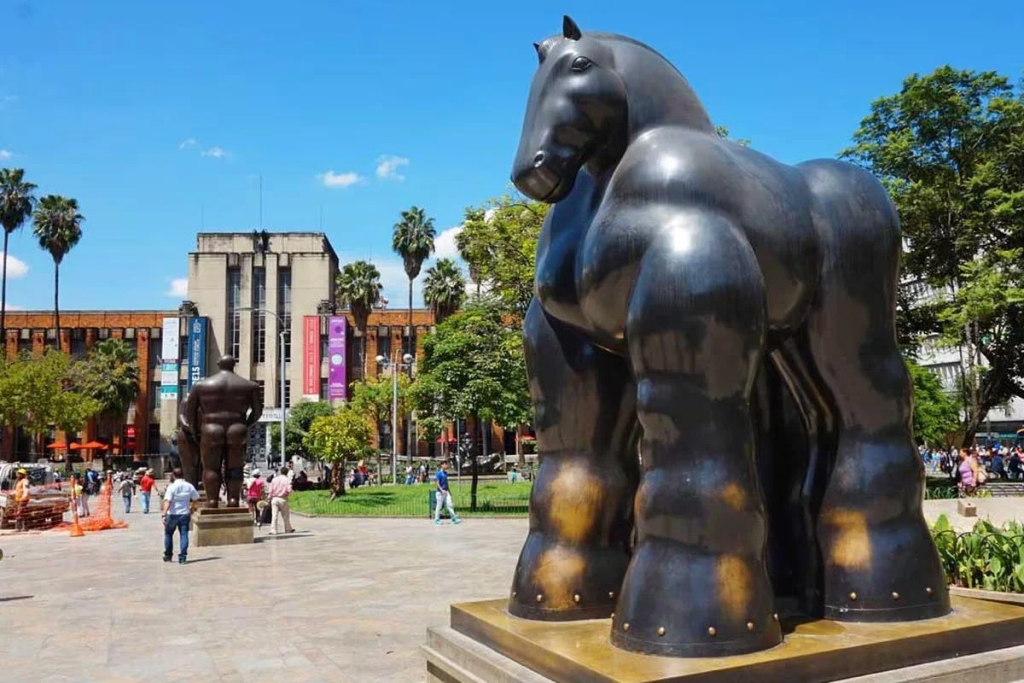
The square contains 23 monumental bronze sculptures donated by Fernando Botero. They include people, animals and everyday objects, all shown with the rounded forms that made his work recognizable around the world.
The horse, the cat, the Roman soldier, Adam and Eve, the large hand and the reclining figures are among the pieces that attract the most attention. You do not need to identify every sculpture to enjoy the plaza. Walk around them slowly and look at how their shape changes from different angles.
You will also notice that parts of the bronze have become brighter and smoother. That comes from years of people touching the sculptures and posing beside them. Be respectful, especially when the plaza is crowded, and do not climb on the works.
Why Botero made everything look so large
Botero is often described as the artist who painted and sculpted “fat people,” but that is not how he explained his work. He was interested in volume: how a larger shape could make a person, animal or object feel more solid and present.
Once you understand that, the work becomes more interesting. The figures are not all meant to be jokes or caricatures. Some are playful, while others deal with power, religion, violence and daily life in Colombia.
Do not skip the Museo de Antioquia
The Museo de Antioquia stands directly beside the plaza, and I would consider it part of the same visit. The outdoor sculptures are easy to enjoy without much background, but the museum shows a broader side of Botero and Colombian art.
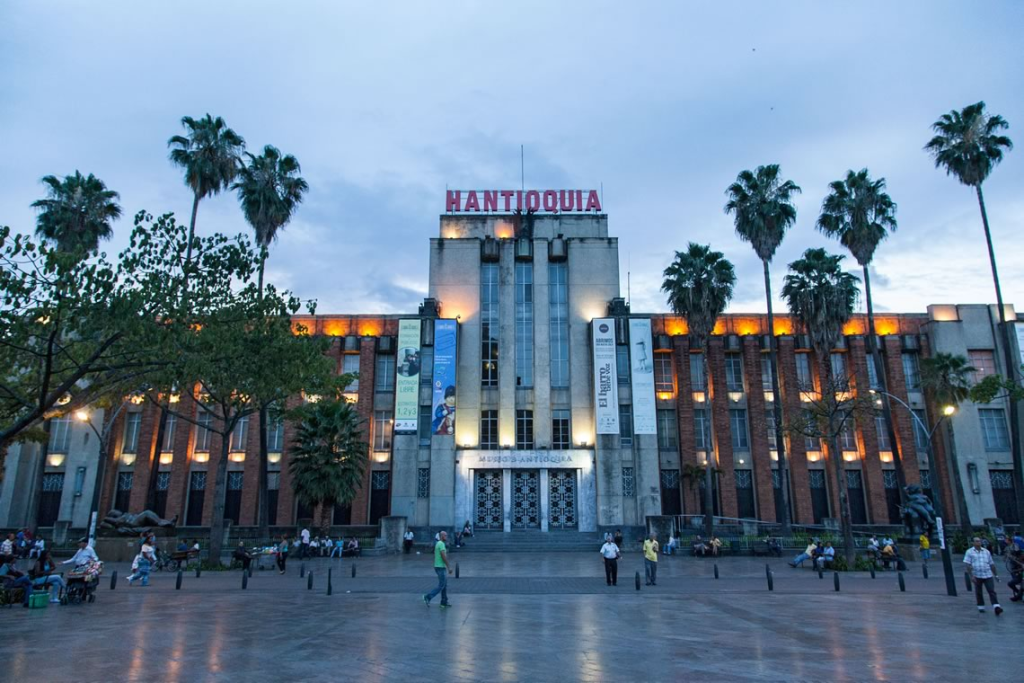
Inside, you will find the Sala Fernando Botero, works from his international collection, regional art and exhibitions that look at Antioquia’s history from different points of view. The museum is large enough to feel worthwhile without being exhausting. Most visitors need around 90 minutes to two hours.
The museum normally opens from 10:00 a.m. Monday through Saturday and closes earlier on Sundays and holidays. Ticket prices can change, and foreign visitors may pay a different rate from Colombian residents, so check the official site before going.
One detail worth knowing: photography is not allowed in the Sala Botero. In many of the other rooms you can take pictures without flash. That rule is easy to miss if you enter expecting the same policy throughout the building.
The Palacio de la Cultura is worth a look too
The black-and-white building beside the plaza is the Palacio de la Cultura Rafael Uribe Uribe. It is one of the most recognizable buildings in Medellín and looks almost theatrical beside the modern city around it.
Entry is normally free. The building usually receives visitors from Monday to Saturday and closes on Sundays, although access to individual rooms can change when events or government activities are taking place. Even a short walk through the interior is worthwhile if the doors are open.
A simple half-day route
You do not need a complicated itinerary. This route works well for most first-time visitors:
1. Arrive at Parque Berrío — Take Metro Line A and walk toward Plaza Botero. The station is close enough that there is no reason to use a taxi for the final part.
2. Walk around Plaza Botero — Spend 30 to 45 minutes with the sculptures. Take your photos, but put your phone away between shots.
3. Visit the Museo de Antioquia — Allow around 90 minutes to two hours. This is the strongest part of the visit for anyone interested in art or history.
4. Step inside the Palacio de la Cultura — If it is open, look around the interior and check whether there is a temporary exhibition or cultural activity.
5. Continue along Carabobo — Walk south on the pedestrian street toward the Palacio Nacional. It is now a shopping center, but the building itself is still interesting.
6. Add Parque San Antonio if you have time — Take the Metro or walk with a guide to see Botero’s damaged bird sculpture and the second bird placed beside it as a memorial.
The wounded bird in Parque San Antonio
A second Botero stop lies near San Antonio station. In 1995, a bomb exploded beside his bird sculpture during a public event, killing more than twenty people and injuring many others. The damaged sculpture was left in place, and Botero later donated a second bird that stands beside it.
The pair says more about Medellín’s recent history than a long list of dates. One sculpture remains broken; the other stands intact. It is a short stop, but it deserves more respect than a quick selfie.
Safety around Plaza Botero
Plaza Botero is visited by large numbers of tourists and is generally manageable during the day. The wider center, however, is crowded and has the same problems as busy downtown areas in many large cities. Phone theft and pickpocketing are more realistic concerns than dramatic violent crime for most visitors.
Visit in the morning or early afternoon rather than at night.
Take photos, then put your phone back in a secure pocket or bag.
Wear a backpack or cross-body bag where you can see it in crowds.
Do not carry a passport, large amount of cash or expensive jewelry unless necessary.
Use the Metro for a simple arrival and departure instead of wandering in search of transport.
A walking tour is a good option if you want context or feel unsure about exploring El Centro alone.
There is no need to be frightened of the area, but it is not the place to walk around distracted with your phone in your hand. Pay attention, and the visit is usually straightforward.
Best time and day to visit
A weekday morning is the easiest option. The light is usually better for photographs, the square has not reached its busiest point, and both the museum and Palacio de la Cultura are normally open.
Sunday can still work because the museum is open, but the Palacio de la Cultura normally is not. The area may also feel busier around holidays, school breaks and city events. Rain is not a major problem because you can move into the museum, but the uncovered plaza becomes less enjoyable during a heavy downpour.
How to get to Plaza Botero
The easiest route is Metro Line A to Parque Berrío. From El Poblado, take the train toward Niquía. From Laureles or Estadio, take Line B to San Antonio and transfer to Line A for one stop to Parque Berrío.
You can also arrive at San Antonio and walk north through the center, but I would recommend that route only during the day and preferably when you already know the area or are with a guide.
What to combine with Plaza Botero
| Type of visit | Good combination |
| For art | Museo de Antioquia, Palacio de la Cultura and the free art floors inside Palacio Nacional. |
| For city history | A guided downtown walk, Parque Berrío, Junín and the Catedral Metropolitana. |
| For a short first visit | Plaza Botero, Museo de Antioquia and lunch before returning by Metro. |
| For a deeper look at Medellín | Add Museo Casa de la Memoria later the same day rather than filling the afternoon with more photo stops. |
Frequently asked questions
Is Plaza Botero free?
Yes. The outdoor square and its sculptures are free. The Museo de Antioquia charges admission.
How many sculptures are in Plaza Botero?
There are 23 monumental bronze sculptures by Fernando Botero.
How long should I spend there?
Allow 30 to 45 minutes for the square. With the museum and nearby buildings, plan for two to three hours.
Is Plaza Botero safe for solo visitors?
It is usually fine during the day when you stay aware of your surroundings. Keep valuables out of sight and avoid wandering through unfamiliar side streets after dark.
Which Metro station is closest?
Parque Berrío on Line A. The station is a short walk from the plaza and museum.
Can I photograph the sculptures?
Yes. Photography is part of the experience outside. Inside the museum, photos are not allowed in the Sala Botero, and flash is not permitted in the rooms where photography is allowed.
Is the Museo de Antioquia worth the admission?
Yes, especially if Plaza Botero is one of your main downtown stops. The museum gives the outdoor sculptures more meaning and includes much more than Botero.
Should I visit with a tour?
You can visit independently, but a guided downtown walk adds useful context about the buildings, art and history of El Centro.
My honest take
Plaza Botero is not the prettiest or most relaxing place in Medellín. It can feel crowded, messy and intense. But it is one of the few places where the city’s art, architecture and everyday life meet in the same square.
Go during the day, use the Metro and make time for the museum. That is enough to turn a short stop into one of the more useful introductions to Medellín.