Updated for 2026
The quick version: Medellín is one of the best big cities in Latin America to enjoy without spending, because so much of what makes it special is public: a free botanical garden, a free world-class memory museum, a plaza full of Botero bronzes, viewpoint hills, Sunday streets closed for bikes, and a cable-car ride over the barrios that costs less than a dollar. Below is the full list, grouped by the kind of day you want, plus the honest caveats where “free” comes with an asterisk.
A running joke among people who live here is that the best things in Medellín are either free or cost a metro fare. It is barely a joke. The city’s two decades of public investment went into exactly the places visitors love most, parks, plazas, libraries, transit, and almost none of it charges admission. I have lived here since 2018, and a good half of what I do with visiting friends costs nothing. Here is the list, with the practical details.
Table of Contents
Green and Outdoors
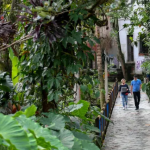
The Jardín Botánico is the headliner: hectares of forest, lagoons, iguanas, and the soaring wooden Orquideorama, free thanks to a city program, with picnics welcome on the lawns. It opens Tuesday to Sunday, and the full details are in the big four attractions guide.
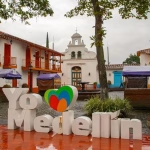
Cerro Nutibara and Pueblito Paisa give you the easiest panoramic views in the city for nothing, with a replica Antioquian village on top as the bonus. Late afternoon is the time.
Cerro El Volador, the bigger of the city’s two hills, is a free natural park with trails, views, and a genuine pre-Hispanic past, the hill was a sacred and burial site long before the Spanish, which makes it one of the few places in the city where the deep history is under your feet.
Cerro de las Tres Cruces is the fitness pilgrimage: a short, steep hike to three crosses and a sweeping view, packed with exercising paisas at dawn. Go in the morning when it is busy, and leave the valuables at home, since quiet hours up there are exactly the wrong time to be carrying a phone worth a month’s salary.
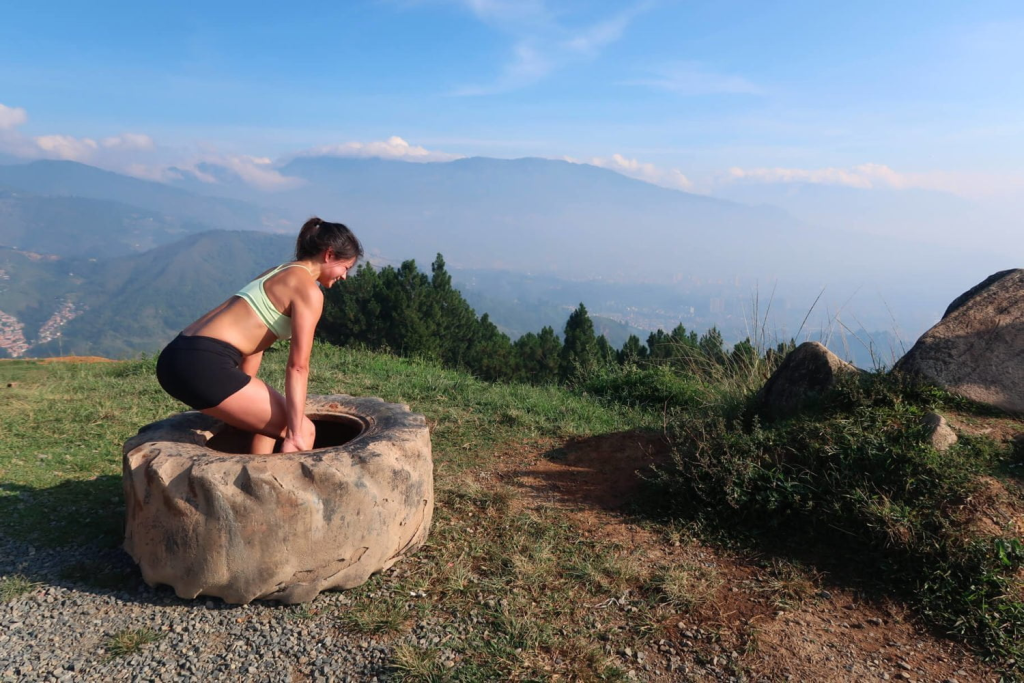
Parques del Río, the landscaped riverfront by the Industriales area, and La Romera, the forest reserve above Sabaneta, round out the green list, the first for an easy stroll, the second for a proper half-day in the trees.
Art, Culture, and Memory
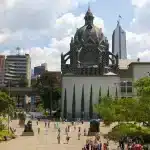
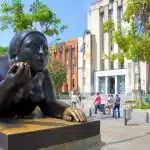
Plaza Botero is the obvious one: 23 monumental bronzes donated by the city’s most famous son, free and open at all hours, though you should go by day. The full story, including the Palacio de la Cultura next door, which is free to step inside, is in the Plaza Botero guide.
The Museo Casa de la Memoria is the most important free museum in Colombia. Built around the testimony of the conflict’s victims, it is heavy, essential, and beautifully done, with many exhibits translated into English and French. Entry is free, you just sign in at the door, and guided visits can be arranged about a week ahead. Plan two hours and do not schedule anything cheerful right after.
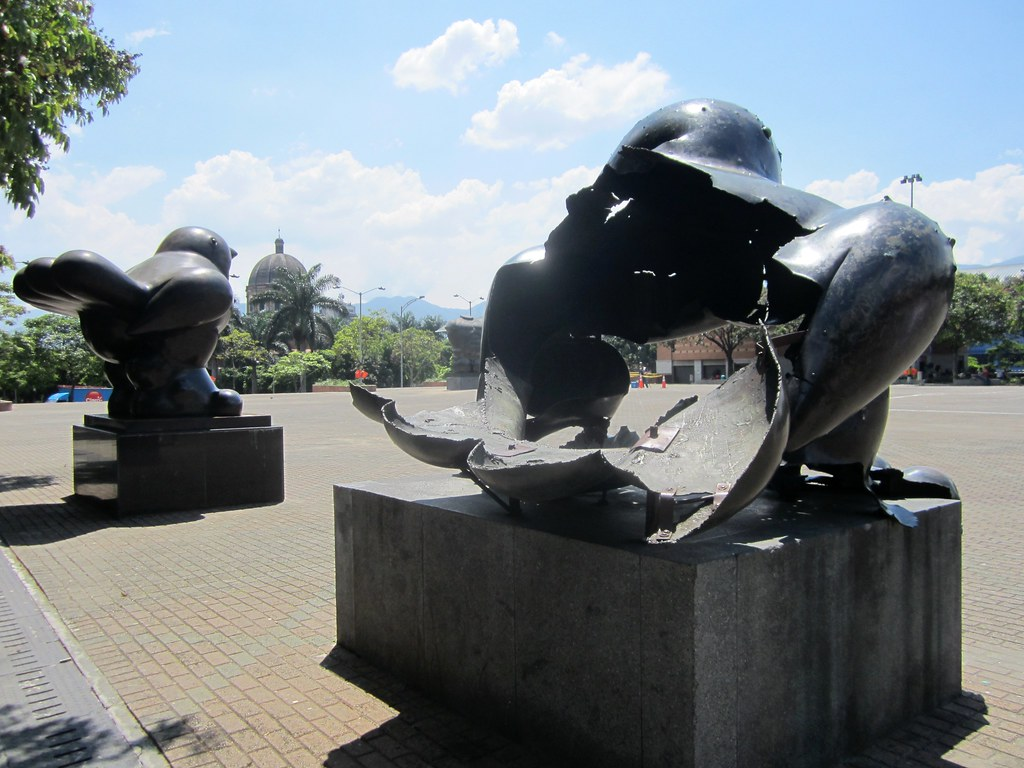
The Wounded Bird in Parque San Antonio, Botero’s bombed sculpture left standing beside its intact twin at his own insistence, is a two-minute, no-cost stop that says more about this city than most paid tours.
The center’s architecture rounds it out: the Catedral Metropolitana on Parque Bolívar, said to be among the largest brick churches in the world, the Palacio Nacional with its grand staircases, now an offbeat shopping arcade, and the Veracruz church. All free, all best by day.
Street Life, Which Is the Real Attraction
Some of the best free entertainment here is simply being on the street. Wander the tree-lined blocks of Provenza and the park loops of Laureles, claim a bench at Parque Sabaneta or Parque Envigado in the evening when the towns come out for ice cream, or brave the glorious chaos of the Minorista market by day with your phone deep in a pocket. People-watching is the city’s unofficial sport, and it costs nothing.
The Sunday Ciclovía deserves its own line: every Sunday and holiday morning the city closes major avenues to cars and hands them to cyclists, runners, skaters, and strollers. Walking or jogging it costs nothing, the people-watching is superb, and it is Medellín at its most likable.
Nearly Free: The Metro Tricks
Two of the city’s best experiences cost a single metro fare of 3,430 pesos, which rounds to free. First, ride the Metrocable Line K from Acevedo up over the hillside barrios to Santo Domingo: it is a public transit line, not a tour, but it delivers the views and the transformation story better than most paid excursions, and the metro guide has the details. Second, take Line B to San Javier and visit Comuna 13’s escalators and street art on your own, which is free and fine by day, though a local guide adds the context that makes the murals make sense, and that part is worth paying for. The Comuna 13 guide covers both routes.
Free Walking Tours, With the Honest Asterisk
The free walking tours of the center are genuinely excellent and the single best orientation to the city. The asterisk is that they run entirely on tips, so “free” really means pay-what-you-can at the end, and the going rate for a good guide is somewhere around 20,000 to 50,000 pesos per person, which the money guide covers. Budget for that and it is still the best value in town.
Seasonal Freebies Worth Planning Around
Two of the city’s biggest spectacles are free. In December, the Alumbrados Navideños, the Christmas lights along the river and across the city, draw millions and cost nothing to wander. And in early August, most of the Feria de las Flores is a citywide free party of concerts, parades, and neighborhood events, with only the grandstand seats at the main parade charging. The timing details are in the best time to visit guide.
The Fine Print
The usual rules apply to all of it: the center’s free attractions are daytime outings, the busier and more local a free spot is, the more the no dar papaya habits matter, and anything involving quiet trails or empty hours is better done when the crowds are there. None of that costs anything either.
Frequently Asked Questions
Can you visit Medellín on a budget? Easily. Most of the city’s signature experiences, the garden, the plazas, the viewpoints, the memory museum, the street life, are free, and the metro covers the rest for under a dollar a ride.
Is the botanical garden in Medellín free? Yes, completely, with small charges only for the butterfly house and one specialty trail.
Is Comuna 13 free to visit? Yes, going on your own by day costs nothing beyond the metro fare. Guided tours charge, and the good ones earn it with context.
Are the free walking tours really free? They run on tips, so plan to give your guide roughly 20,000 to 50,000 pesos if you enjoyed it.
Are the Christmas lights free? Yes. The Alumbrados along the river and around the city are free to visit throughout December.
What is the best free view of Medellín? Pueblito Paisa on Cerro Nutibara for ease, Cerro de las Tres Cruces for the workout, and the Metrocable for the moving version at the price of a metro fare.