| The quick answer: Carmen is worth considering when you want one polished, modern Colombian meal in Medellín. It is expensive by local standards, but the setting, service and use of ingredients from different Colombian regions make it more than a normal dinner in El Poblado. Book ahead for Friday or Saturday, choose the à la carte menu if you want more control over the bill, and allow at least two hours. |
Medellín has far more ambitious restaurants than it did a decade ago, but Carmen still matters. It opened in 2009, before the city was widely discussed as a serious food destination, and helped show that Colombian ingredients could be used in a modern dining room without losing their identity.
That history does not automatically make it the best restaurant in Medellín, and it certainly does not make it cheap. What Carmen does well is offer a dependable introduction to contemporary Colombian cooking in a room that feels special without becoming painfully formal.
Carmen Medellin
Carmen Medellín at a glance
| Detail | What to know |
| Location | Carrera 36 #10A-27, El Poblado |
| Best for | A special dinner, food-focused visitors and couples |
| Food style | Contemporary Colombian cuisine |
| Menus | À la carte and a multi-course tasting menu |
| Typical time | About 2 hours à la carte; longer for the tasting menu |
| Price level | High for Medellín |
| Reservations | Strongly recommended for weekend dinners |
| Opening | Dinner Monday-Saturday; lunch Tuesday-Saturday |
| Closed | Sundays and holiday Mondays |
Why Carmen is important to Medellín’s food scene
Carmen Ángel and Rob Pevitts opened the restaurant after studying in San Francisco and moving to Medellín. Their idea was not to reproduce traditional Colombian plates exactly as they were already served. Instead, they used modern techniques and ingredients from around the country to create something recognisably Colombian but less predictable.
The restaurant now works under executive chef Juan José Cárdenas. Its official description still centres on Colombian biodiversity, regional traditions and direct relationships with farmers, fishers, artisans and small producers.
This approach is common language in restaurants today. It was less common in Medellín when Carmen opened. That is why the restaurant is often described as one of the businesses that helped push the city’s dining scene forward.
What is the restaurant like?
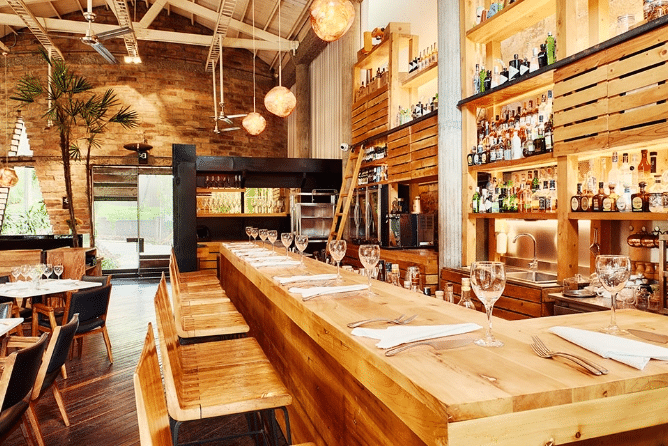
Carmen occupies a converted house in the Provenza side of El Poblado. The entrance is easy to miss from the street, which makes the interior feel more removed from the traffic and noise outside.
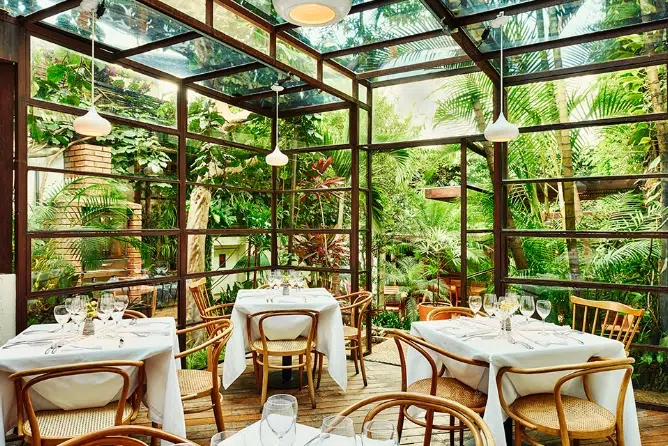
There are several distinct areas: a darker bar, a bright conservatory filled with plants and a leafy courtyard. The conservatory is the most photographed part of the restaurant. The courtyard feels more relaxed, although rain and evening temperatures can affect where guests are seated.
The room is polished but not stiff. Smart casual clothing fits well. You do not need a jacket or formal dress, but beach clothes and sportswear would feel out of place at dinner.
What kind of food does Carmen serve?
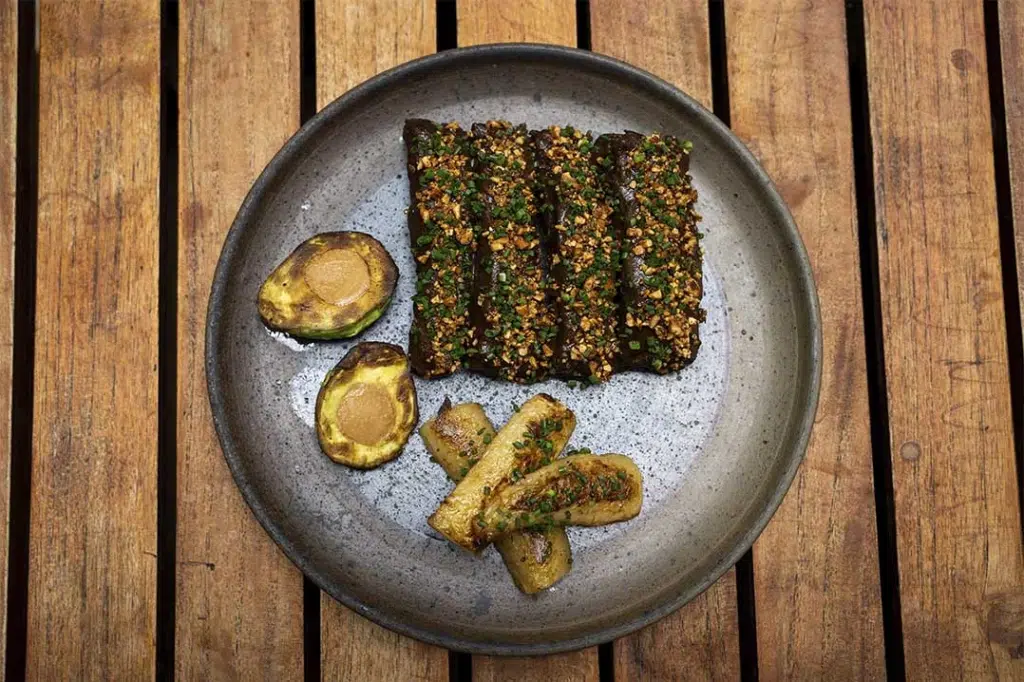
The menu changes, so it is better to understand the style than to arrive determined to order one dish seen in an old review. Expect familiar ingredients used in unfamiliar ways, along with products that many visitors have never tried before.
Past menus have included Pacific fish, Caribbean crab, native fruits, cassava, plantain, coconut, Amazonian ingredients and carefully prepared pork. The kitchen is not trying to reproduce a bandeja paisa or a traditional sancocho. It uses Colombia’s regional pantry as the starting point for modern plates.
The portions are designed for a restaurant meal rather than a giant Antioquian lunch. Ordering several starters to share can be a good way to try more of the menu without committing to the full tasting experience.
For a broader introduction to the country’s traditional cooking, see 52 Colombian dishes to try.
À la carte or tasting menu?
Choose à la carte when…
You want to control the cost.
You have food preferences or only want a lighter meal.
You would rather share several dishes.
You do not want dinner to take most of the evening.
Choose the tasting menu when…
The restaurant itself is one of the main experiences of your trip.
You enjoy trying unfamiliar ingredients.
You are comfortable with a longer meal and a larger bill.
You want to see more of what the kitchen can do.
The 50 Best Discovery guide currently lists a seven-course tasting menu and places its starting price at about USD 118. That figure is useful only as a guide because menus, exchange rates and taxes change. Always check the current menu before booking.
For most first-time visitors, the à la carte menu is the safer choice. It still gives you the Carmen experience and makes it easier to choose around ingredients you do or do not enjoy.
Vegetarian and dietary requirements
Carmen’s ingredient-led style gives the kitchen more flexibility than a steakhouse or seafood restaurant, and vegetable dishes are treated as part of the menu rather than an afterthought. That does not mean every menu is automatically suitable for every diet.
Mention allergies, vegetarian requirements and other restrictions when reserving, especially for the tasting menu. Do not wait until the first course arrives. Cross-contamination may still matter for severe allergies, so ask the restaurant directly rather than relying on an old online menu.
How expensive is Carmen?
Carmen is expensive compared with everyday restaurants in Medellín. It is more useful to compare it with other high-end restaurants in Colombia or with a special dinner in a major international city.
The 50 Best Discovery guide currently estimates an average spend of around USD 41 per person for the à la carte experience and lists the tasting menu from around USD 118. Those numbers may not include everything you order and can shift with the menu and exchange rate.
The final bill depends heavily on drinks, additional courses and whether you choose the tasting menu. Check whether voluntary service has already been added before leaving another tip.
| Budget tip: Lunch is usually the easiest way to try Carmen without turning it into a long, expensive evening. The room is quieter, and you can order two or three dishes à la carte instead of choosing the tasting menu. |
Service and language
Carmen receives many international visitors, so English is more likely here than in an average Medellín restaurant. Spanish is still useful, and not every member of staff will necessarily speak it at the same level.
Service is meant to explain the ingredients and the thinking behind each dish. That is helpful when the menu uses unfamiliar Colombian products, although some visitors may find lengthy explanations unnecessary. Ask questions when something is unclear; there is no prize for pretending you recognise every ingredient.
Reservations and opening hours
Reservations are recommended, especially for Friday and Saturday evenings. A weekday lunch or early dinner is usually easier to book.
The restaurant’s current published schedule is:
Monday: dinner from 6:30 p.m. to 10:00 p.m.
Tuesday-Thursday and Saturday: lunch from noon to 2:30 p.m.; dinner from 6:30 p.m. to 10:00 p.m.
Friday: lunch from noon to 2:30 p.m.; dinner from 6:30 p.m. to 10:30 p.m.
Sunday and holiday Monday: closed.
Book through the official Carmen website or call the restaurant. Confirm the schedule again when booking, as holiday hours can change.
How to get there
Carmen is in Provenza, close to Vía Primavera and a short walk from many El Poblado hotels. Poblado Metro station is the nearest station on Line A, but it is not close enough to feel convenient in formal clothes or rain. The walk is uphill and usually takes around 20 to 30 minutes.
For dinner, an app-based ride or taxi is normally the easiest option. Traffic becomes heavy on weekend evenings, so leave extra time rather than arriving stressed and late.
The surrounding area is covered in the Provenza Medellín guide.
What is nearby?
Carmen is surrounded by restaurants, cafés and bars, but there is no need to plan a complicated evening around it. The meal will probably be the main event.
Vía Primavera is nearby for a short walk before dinner.
Manila is a quieter area for coffee or dessert earlier in the day.
Parque Lleras is close, although it is louder and more chaotic than Provenza.
Moshi and Don Diablo, which are connected to the same restaurant group, are next door or very close.
Who will enjoy Carmen?
Visitors who want a modern introduction to Colombian ingredients.
Couples celebrating a birthday, anniversary or final night in Medellín.
Food-focused travellers who enjoy longer meals and detailed service.
People who prefer a beautiful dining room without a strict formal atmosphere.
Who might want to skip it?
Travellers mainly looking for traditional Antioquian food.
Anyone on a tight budget.
People who dislike small, carefully presented dishes.
Visitors who prefer very casual restaurants or quick meals.
Anyone expecting the main World’s 50 Best ranking rather than a 50 Best Discovery listing.
Is Carmen Medellín worth it?
Yes, for the right occasion. Carmen is not the place to learn what ordinary people in Medellín eat every day, and it is not the cheapest way to taste Colombian ingredients. It is a polished interpretation of the country’s biodiversity and regional flavours.
The main reason to go is not a single famous dish. It is the combination of the room, service and the kitchen’s ability to take ingredients from different parts of Colombia and make them feel connected.
I would recommend it most strongly to visitors choosing one high-end dinner in Medellín. Order à la carte if you are unsure about the cost or style. Choose the tasting menu only when you genuinely enjoy that kind of meal, not because you feel it is the ‘correct’ way to visit.
Frequently asked questions
Does Carmen Medellín have a Michelin star?
No. Michelin does not currently publish a restaurant guide for Colombia. Carmen appears in the 50 Best Discovery guide, which is separate from the ranked World’s 50 Best Restaurants list.
Do I need a reservation?
A reservation is strongly recommended for weekend dinners and special dates. Walk-ins may be possible at quieter times or at the bar, but relying on that is risky if the restaurant is an important part of your evening.
Is there a dress code?
The restaurant does not feel strictly formal. Smart casual clothing is appropriate. You do not need a jacket, but very casual beach or gym clothing would feel out of place.
Is Carmen good for vegetarians?
The kitchen regularly works seriously with vegetables, but the exact menu changes. Contact the restaurant before booking, particularly if you want a vegetarian tasting menu or have strict dietary requirements.
How long should I allow?
Allow about two hours for an à la carte dinner. The tasting menu can take considerably longer, especially when the restaurant is busy.
Can children eat at Carmen?
Families should ask the restaurant directly about current policies and suitable dishes. The long tasting menu and adult-focused atmosphere will not suit every child.
| Carmen helped open the door for Medellín’s modern restaurant scene, but its history is not the only reason to book. Go when you want a thoughtful, attractive and distinctly Colombian dinner. Just check the current menu first and choose the à la carte option when the tasting menu feels like more food, time or money than you actually want. |