| The quick answer: Choose Finca La Arrinconada for a traditional full-day farm experience, the Urban Coffee Tour for a community-led visit without leaving Medellín, Don Leandro for an easy Parque Arví option, and a short tasting or barista workshop when you have only a few hours. A good farm tour should explain growing, harvesting, processing, drying, roasting and brewing—not just give you a costume and a cup of coffee. |
You do not need to travel all the way to Salento to visit a working Colombian coffee farm. Antioquia grows coffee on the mountains surrounding Medellín, and several farms now welcome visitors within roughly an hour of the city.
The experience varies more than most booking pages suggest. One tour may be a serious look at a family farm. Another combines coffee with a spa, horseback ride or sightseeing stop. An urban tour may teach you less about large-scale production but more about the people and neighborhoods behind the cup.
I have lived in Medellín since 2018. For a first visit, I would choose the tour according to time and depth: a half-day urban or Santa Elena experience when your itinerary is crowded, and a full rural farm when coffee is one of the main reasons for the trip.

Coffee Tour Medellin
Coffee tours near Medellín at a glance
| Experience | Area | Best for | Typical length | Price level |
| Finca La Arrinconada | San Sebastián de Palmitas | A traditional working-farm day | Most of a day | $$-$$$ |
| Urban Coffee Tour | La Sierra, Comuna 8 | Community context and limited time | About half a day | $$ |
| Don Leandro Coffee Farm | Santa Elena / Parque Arví | Convenient farm visit and add-on experiences | 1.5 hours to half a day | $$-$$$ |
| D’Arrieros Coffee Farm | San Sebastián de Palmitas | Coffee process with transport and optional activities | Half or full day | $$-$$$ |
| City tasting or workshop | Central Medellín / El Poblado / Laureles | A short introduction without farm travel | 1-3 hours | $-$$ |
Price levels are relative. Direct rates, private transport, group size and optional activities can change the total considerably.
How much does a Medellín coffee tour cost?
As a rough 2026 planning range, coffee experiences around Medellín usually fall into the following bands:
Short tasting or brewing workshop: roughly COP 60,000-180,000 per person.
Half-day farm or urban tour: roughly COP 180,000-350,000 per person.
Full-day farm visit with transport and food: roughly COP 300,000-550,000 per person.
Private, spa, horseback or premium combinations: often COP 500,000 or more per person.
These are broad planning figures, not fixed prices. Booking platforms may add commissions, and a cheap listing may exclude transport, lunch or entrance fees. Compare what is included before comparing the headline price.
| Best-value rule: A direct farm booking may cost less or include more, but a platform can offer easier cancellation and payment protection. Check both before paying. |
1. Finca La Arrinconada: the strongest traditional farm experience
Finca La Arrinconada is in San Sebastián de Palmitas, a rural corregimiento west of Medellín. The family describes the property as a four-generation farm preserving coffee, panela and arriero traditions, and Medellín’s tourism authority includes it among the city’s agrotourism experiences.
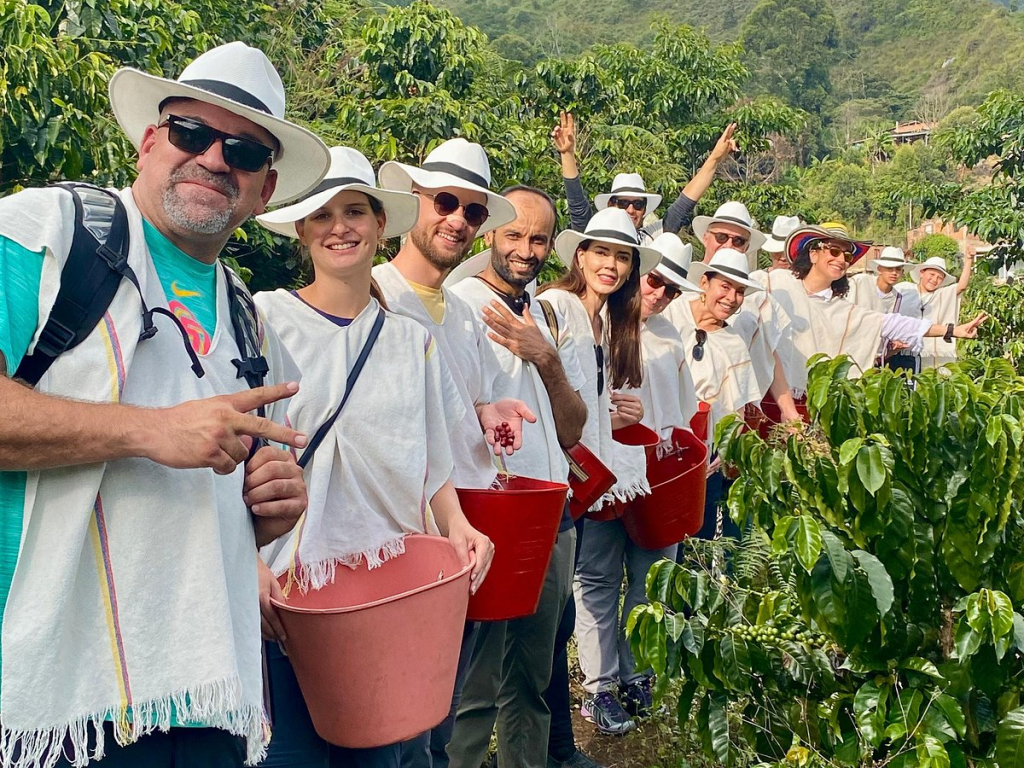
This is the best fit when you want more than a quick demonstration. The standard experience includes transport from Medellín, a guided farm walk, participation in parts of the production process, traditional food and time to understand how coffee and sugarcane fit into rural Antioquian life.
Why choose it
A family-run farm rather than a staged city attraction.
Coffee and panela provide a broader view of rural production.
Transport and lunch make the day simple for first-time visitors.
A stronger cultural experience than a short tasting.
What to consider
This takes most of a day, and the farm terrain is hilly. Wear closed shoes and do not plan an evening event immediately after the return. Confirm pickup location, language and the amount of walking before booking.
Check current options on the Finca La Arrinconada website.
2. Urban Coffee Tour: coffee and community inside Medellín
The Urban Coffee Tour takes place in La Sierra, a hillside neighborhood in Comuna 8. Visitors normally reach the area using the Ayacucho tram and cable-car network before walking through the community to small urban coffee plots.
This tour is not simply a substitute for a large rural finca. Its value is the combination of coffee, neighborhood history and local economic development. The official tour description warns that the route includes 577 steps, so it is much more physically demanding than the word “urban” suggests.
Why choose it
No long road transfer outside the city.
Local guides connect coffee with La Sierra’s recent history.
Money supports a community-based tourism project.
The tram and cable-car journey adds another view of Medellín.
What to consider
The stairs make it unsuitable for some visitors, and this should be booked as an organised visit rather than attempted as an independent farm search. Respect residents’ privacy and ask before photographing people or homes.
See current schedules through the Urban Coffee Tour website.
3. Don Leandro: an easy coffee experience near Parque Arví
Don Leandro operates in the Santa Elena and Parque Arví area above Medellín. Its current offerings range from a roughly 90-minute farm and barista experience to longer packages that add transport, wellness treatments or other activities.
This is one of the easiest options to combine with the Metrocable and Parque Arví. It suits visitors who want a scenic mountain day without committing to a full rural journey west or south of the city.
Why choose it
Close to a major Medellín attraction.
Short and longer versions are available.
Useful for travellers interested in brewing as well as farming.
The cooler Santa Elena climate can be a welcome change from the valley.
What to consider
Some packages lean toward entertainment or wellness rather than a deep agricultural visit. Read the exact itinerary. Confirm whether transport begins in Medellín, at the Arví cable station or at the farm itself.
Current experiences are listed on the Don Leandro website.
4. D’Arrieros: a flexible Palmitas farm tour
D’Arrieros also works in San Sebastián de Palmitas, about 45 minutes from central Medellín in good traffic. Current listings commonly include transport, snacks, tastings and a guided explanation of coffee production, with optional combinations on some departures.
This is a practical choice for visitors who want a conventional farm tour with the logistics handled. It can be easier to find through established activity platforms than through a polished direct-booking website.
Why choose it
Pickup options from common visitor areas.
A straightforward seed-to-cup programme.
Several package lengths and combinations.
Palmitas provides genuine rural scenery close to the city.
What to consider
Check whether optional horseback riding or other activities are included, offered separately or simply pictured in the listing. Travellers with mobility concerns should ask about slopes and wet ground before paying.
5. A city coffee tasting or barista workshop
A farm is not the only way to learn. Medellín has specialty roasters, a coffee museum and laboratories that offer tastings, preparation demonstrations or workshops. These experiences focus more on flavour, roasting and brewing than on agriculture.
This is the best choice when you have a short stop, bad weather or limited mobility. It also works well after a farm visit because the two experiences answer different questions: the farm explains how coffee is produced, while a tasting explains why two Colombian coffees can taste completely different.
Good short-format options
A guided tasting comparing several Colombian origins.
A brewing workshop using methods such as V60, Chemex or French press.
A visit to Medellín’s coffee museum.
A roastery tour explaining green beans, roast levels and freshness.
Medellín’s official tourism site currently lists El Laboratorio de Café and the Museo del Café among its coffee experiences.
What happens on a coffee farm tour?
A serious tour should explain the chain from seed to cup. The exact order varies by farm and season, but the main stages are similar.
Seedling and planting: how coffee plants begin and when they start producing.
Growing conditions: the role of altitude, shade, rain, soil and variety.
Harvesting: why ripe cherries are normally selected by hand in Colombia.
Pulping and fermentation: how the fruit is removed and the beans are processed.
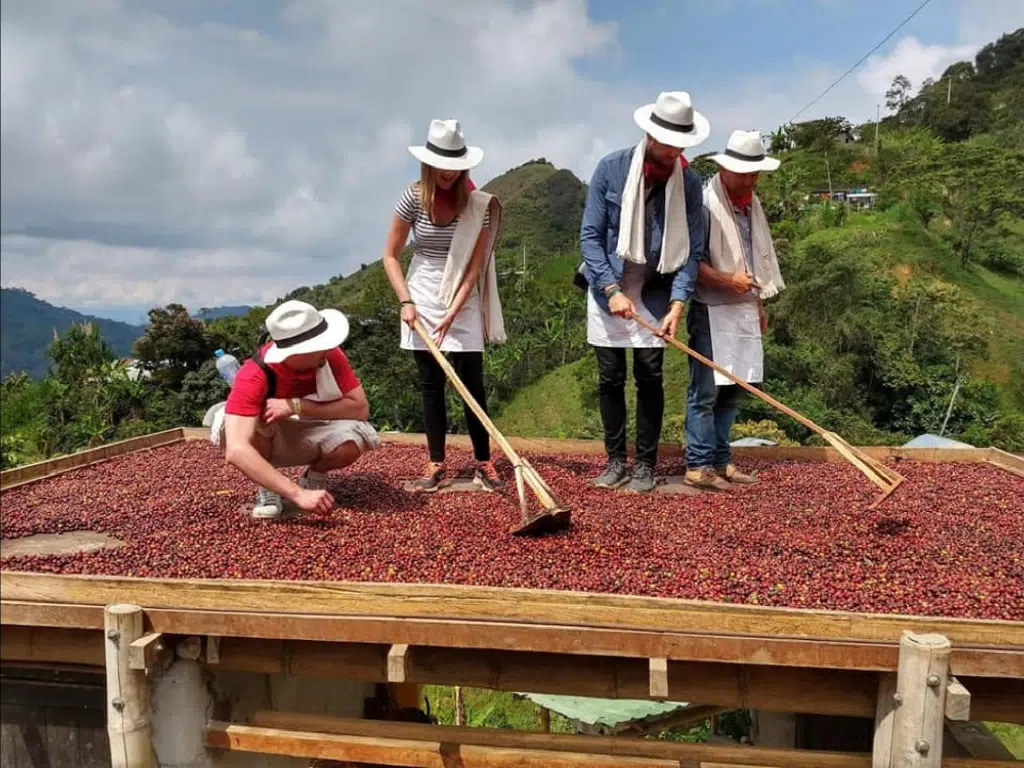
Washing and drying: how moisture is reduced before storage and sale.
Sorting and roasting: how defects are removed and heat develops flavour.
Grinding and brewing: how preparation changes what reaches the cup.
The National Federation of Coffee Growers describes Colombian production as a full process from seed and cultivation through harvesting, processing and preparation. A good guide should also discuss the difficult parts: changing prices, weather, labour, plant disease and the amount farmers actually earn.
Is Medellín part of Colombia’s Coffee Region?
Medellín and Antioquia have a deep coffee tradition, but the city is not inside the UNESCO-inscribed Coffee Cultural Landscape. That World Heritage property covers six agricultural landscapes and 18 urban centres in the western and central Andes, mainly associated with Caldas, Quindío, Risaralda and northern Valle del Cauca.
This does not make an Antioquia tour less authentic. It simply means that “Coffee Region” can refer either broadly to coffee-growing Colombia or more specifically to the Eje Cafetero and UNESCO landscape.
For a longer country route, see Things to Do in Colombia and the Most Beautiful Towns in Colombia.
When is coffee harvested near Medellín?
Coffee farms remain worth visiting throughout the year, but you may not see ripe red cherries every month. Harvest timing varies with altitude and local weather, and Colombia’s different growing regions help the country produce coffee during much of the year.
Around Antioquia, farms commonly have a main harvest in the second half of the year and a smaller mitaca harvest at another point in the cycle. Exact timing changes from farm to farm. Ask before booking when picking coffee is important to you.
How to choose the right tour
| Your priority | Best type of experience |
| The most complete traditional day | Finca La Arrinconada or another full Palmitas farm |
| Community history without leaving Medellín | Urban Coffee Tour |
| Coffee combined with Parque Arví | Don Leandro |
| Easy pickup and a conventional farm programme | D’Arrieros |
| Only one to three hours available | City tasting, roastery or barista workshop |
| Deep coffee-country travel | Spend several nights in the Coffee Region, Jardín or another farming town |
Questions to ask before booking
Is the visit on a working farm or at a demonstration garden?
Who owns the farm, and who receives the tour income?
Is transport included, and exactly where does it start?
Is the tour available in English?
How much walking, climbing and mud should I expect?
Are lunch, drinks, tastings and entrance fees included?
Will the farm be harvesting during my visit?
How large is the group?
What happens if heavy rain affects the route?
Is the cancellation policy different for direct and platform bookings?
What to wear and bring
Closed shoes with grip. Coffee grows on slopes, and paths become muddy.
Light clothes that can get dirty.
A rain jacket or compact umbrella.
Sun protection. Mountain cloud does not eliminate strong UV.
Water and a small amount of cash.
Insect repellent for lower, warmer farms.
A light layer for Santa Elena and higher elevations.
Any required medication; rural farms may be far from a pharmacy.
Coffee tours with children or limited mobility
Children often enjoy picking cherries, operating simple equipment and tasting fruit or panela. The problem is terrain, not the subject. Ask about steep paths, open water, animals, machinery and the length of the road transfer.
The Urban Coffee Tour’s long staircase is unsuitable for many people with mobility limitations. A short city workshop or a farm with vehicle access and a compact demonstration area may be a better choice. Do not assume “family-friendly” means stroller-friendly.
Can you visit a coffee farm without a tour?
Some farms accept direct reservations, but arriving without notice is rarely a good plan. These are workplaces and private homes, not public parks. A guide also provides translation, transport and context that are difficult to reproduce independently.
Book directly when the farm has a reliable reservation system and you can arrange transport. Use a tour operator when the road is difficult, your Spanish is limited or you want hotel pickup.
A coffee tour versus the Coffee Region
A Medellín day tour is enough to understand the basic production process and meet a farming family. The Coffee Region is better when you want several farms, colonial towns, long hikes and a landscape-focused trip.
Do not add Salento only for a coffee tour when your itinerary is already centred on Medellín. Go to the Coffee Region because you want the full region, not because someone says Antioquia coffee is somehow not real.
A simple half-day coffee plan inside Medellín
1. Take the Metro to San Antonio and connect to the Ayacucho tram.
2. Join the pre-booked Urban Coffee Tour in La Sierra.
3. Return to the central valley by tram and Metro.
4. Finish with a specialty coffee tasting in Laureles, El Poblado or the centre.
Use the Medellín Metro Guide to plan the public-transport section.
Frequently asked questions
What is the best coffee tour near Medellín?
Finca La Arrinconada is the strongest all-round option for a traditional full-day farm experience. The Urban Coffee Tour is more distinctive when community history and staying inside the city matter most.
How long does a coffee tour take?
Short tastings last one to three hours. Most farm tours need four to seven hours once transport is included. Full-day programmes can take eight hours or more.
Do I need to drink coffee to enjoy the tour?
No. Farming, processing and rural culture are the main subjects. Tell the guide when you do not want several tastings, especially if caffeine affects you.
Can I pick coffee beans?
Only when ripe cherries are available and the farm permits it. Tours sometimes demonstrate picking outside the main harvest, but a real harvest experience cannot be guaranteed year-round.
Are coffee tours available in English?
Many established tours offer English, but not every farmer or staff member speaks it. Confirm the language before booking.
Should I book through a platform or directly?
Direct booking may give the farm more of the payment and can include better value. A platform may offer easier payment, reviews and cancellation. Compare the full terms.
Is a Guatapé and coffee combination worth it?
It is efficient for travellers with very little time, but both parts become shorter. A dedicated farm day is better for coffee, while a normal Guatapé day is better for the town and Piedra del Peñol.
Can I buy coffee at the farm?
Usually yes. Ask for the roast date, origin and whether the beans were grown on that property. Buy whole beans when you can grind them at home.
| The best coffee tour is the one that shows where the money, labour and knowledge behind the cup come from. Choose a real farm when you have the time, an urban community tour when context matters most, and a city tasting when your schedule is short. Medellín offers all three without pretending that every experience is the same. |