Medellín and Colombia, from someone who lives here
Banks in Colombia: Accounts, ATMs, Cards and Transfers for Foreigners
The quick version: Visitors can manage with a foreign card and some Colombian pesos. A local bank account becomes useful when you live here, receive income in pesos, pay rent and bills, or use local transfers regularly. Foreigners can open accounts, but the paperwork varies. In practice, a cédula de extranjería makes the process much easier.
Banks in Colombia
What do you actually need?
Your situation
The simplest setup
Short visit
A no-foreign-transaction-fee card, a backup card and some cash.
One to three months
Foreign cards plus a reliable international transfer service; a local account is optional.
Living in Colombia
A Colombian bank account or digital wallet becomes very useful.
Receiving a Colombian salary
A local account is normally the practical choice.
Paying rent and bills
A local account, Nequi or another accepted wallet reduces friction.
Buying property or moving a large sum
Use a bank, regulated foreign-exchange professional and qualified legal or tax advice.
Do visitors need a Colombian bank account?
Usually not. Cards are widely accepted in Medellín, Bogotá, Cartagena and other large cities. You can also find ATMs in airports, banks, supermarkets and shopping centres. A short-term visitor can get by with a foreign debit or credit card and a modest amount of cash.
Cash still matters, though. Small restaurants, market stalls, rural transport, neighbourhood shops and some independent workers may prefer cash or a local transfer. Foreign currency is not a useful substitute. Even when a tourist business accepts dollars, the exchange rate is rarely attractive.
I have lived in Medellín since 2018, and my usual rule is simple: carry enough cash to get through a meal, a taxi or a broken payment terminal, but do not walk around with more than you need.
Visa and Mastercard are the easiest international cards to use. American Express is accepted in some hotels, restaurants and larger shops, but it is not as dependable. Always travel with a second card stored separately, because a blocked or damaged card can create a surprisingly difficult day.
Tell your bank that you are travelling if it still uses travel notifications.
Use a card with no foreign transaction fee when possible.
Keep a second card in a separate place.
Turn on transaction alerts in your banking app.
Check the amount on the terminal before entering your PIN.
Always choose Colombian pesos
An ATM or card terminal may offer to charge you in euros, dollars or another home currency. This is called dynamic currency conversion. It sounds helpful, but the conversion rate is usually worse than the rate applied by your own card network.
Choose Colombian pesos, written as COP, and let your bank or card provider handle the conversion. The same rule applies when a hotel or shop offers to bill your card in your home currency.
Using ATMs without losing too much to fees
Colombian ATMs often charge their own fee, and your home bank may add another one. Withdrawal limits also vary by bank, machine and card. Exact figures change often enough that a fixed list becomes outdated quickly.
The safer and usually cheaper approach is to follow a few basic rules:
Use an ATM inside a bank, supermarket or shopping centre.
Read the fee shown on screen before confirming.
Decline conversion into your home currency.
Make fewer, larger withdrawals when that lowers the total fees, without carrying excessive cash.
Try a different bank network if a machine rejects your card or charges an unusually high fee.
Take your card and cash before stepping away from the machine.
Yes. Foreigners can open Colombian bank accounts, but there is no single set of documents that works at every institution. The rules depend on the bank, the account, your visa status and the way you earn your money. Branch staff may also ask for extra documents to meet identity and anti-money-laundering checks.
Be prepared to show some or all of the following:
A valid passport.
A visa or other proof of legal status, when applicable.
A cédula de extranjería.
A second photo ID.
Proof of address, such as a lease or utility bill.
Evidence of income, employment, studies or the source of your funds.
Some banks may open certain accounts using a passport, while others expect a cédula de extranjería. BBVA currently tells adult foreign customers to visit a branch with a passport, while Bancolombia lists several possible identity and supporting documents. That does not mean every application is approved with a passport alone.
If you are settling in Colombia, the cédula is the document that makes everyday administration much easier. It is used for banking, mobile plans, contracts and many online services. Tourists should not assume that a passport will unlock the same products available to residents.
Opening an account: a practical approach
Choose two banks with branches near your home or work.
Check their current foreign-customer requirements online.
Bring more documentation than the minimum list suggests.
Visit a larger branch in an area used to international customers.
Ask about monthly fees, ATM access, transfer limits and international transfers.
Do not deposit a large amount until the account and app are working normally.
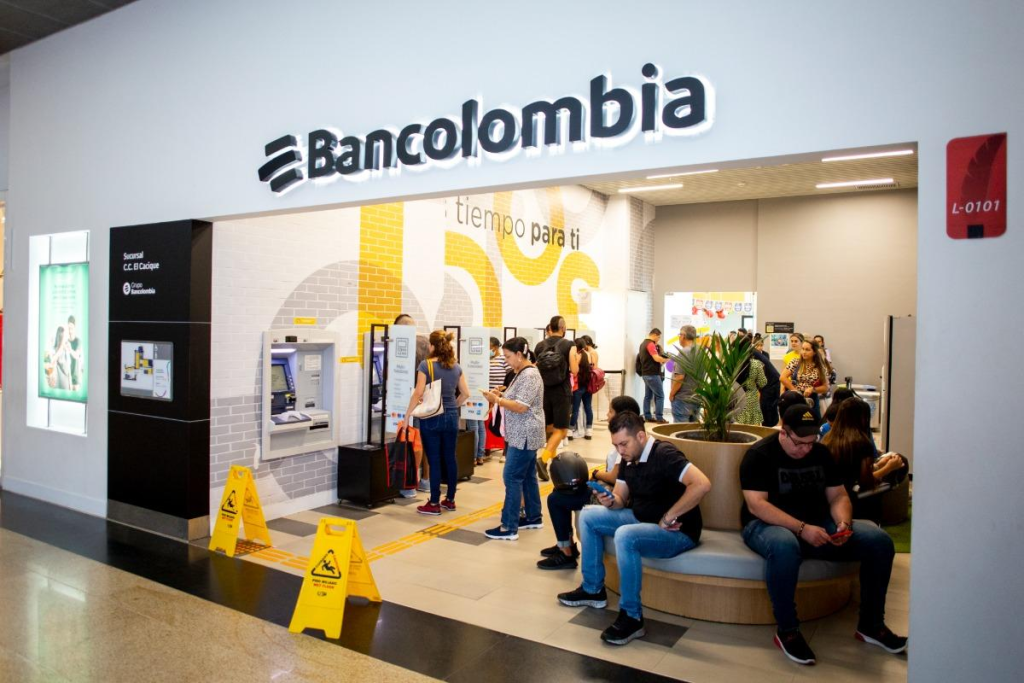
When I opened a Bancolombia account in Medellín, the process was easier than the official list suggested. Other foreigners have had the opposite experience. That inconsistency is normal. If one branch cannot help, another branch or another bank may give you a different answer.
The main banks in Colombia
Bank
Why people use it
What to check
Bancolombia
Large network and very common for local transfers and QR payments.
Account fees, app limits and branch requirements.
Davivienda
Large national bank with branches, ATMs and the DaviPlata ecosystem.
ATM fees and which products accept foreign documents.
Banco de Bogotá
Established national bank with broad business and personal services.
Branch access and account packages.
BBVA Colombia
Large network with strong digital banking and international brand familiarity.
Foreign-customer branch requirements and card fees.
Banco de Occidente
Part of a large Colombian financial group and useful in some employer networks.
Branch availability where you live.
There is no universal best bank. The most useful bank is often the one your employer, landlord, clients and regular businesses already use. App reliability, nearby ATMs and customer service may matter more than a small difference in monthly fees.
Nequi, DaviPlata and digital wallets
Digital wallets are a normal part of Colombian life. Small shops, delivery drivers and independent workers often accept a transfer or QR payment even when they do not take cards.
Nequi is one of the most widely recognised options. Foreign residents can currently create an account with a cédula de extranjería, while Venezuelan residents may also qualify with a PPT. Nequi says foreign applicants must be residents of Colombia and at least 18 years old.
DaviPlata is another major wallet. Other banks and fintech companies also offer low-cost digital accounts, but online sign-up is often designed around a Colombian cédula and local identity checks. A service that works for a Colombian citizen may not accept a passport or foreign ID.
Bre-B: instant transfers between banks
Bre-B is Colombia’s interoperable instant-payment system. It allows participating banks and wallets to send money between each other immediately, at any time, instead of limiting fast transfers to customers of the same institution.
Users register a llave, or key, inside their bank or wallet app. The key can be linked to a phone number, email address, identity document or an alphanumeric code. Someone can then pay you using that key rather than asking for a long account number.
For a foreign resident with a Colombian account, Bre-B makes everyday payments much easier. It is especially useful when your landlord, friend or local business uses a different bank.
Sending money to Colombia
The best transfer method depends on where the money starts, how quickly it is needed and whether the receiver wants a bank deposit or cash pickup. Common options include international bank transfers, remittance companies and online transfer services.
Do not compare services by the advertised fee alone. Compare:
The exchange rate used.
The transfer fee.
Any receiving-bank charge.
The exact number of Colombian pesos that will arrive.
The delivery time and transfer limit.
What identification the receiver needs.
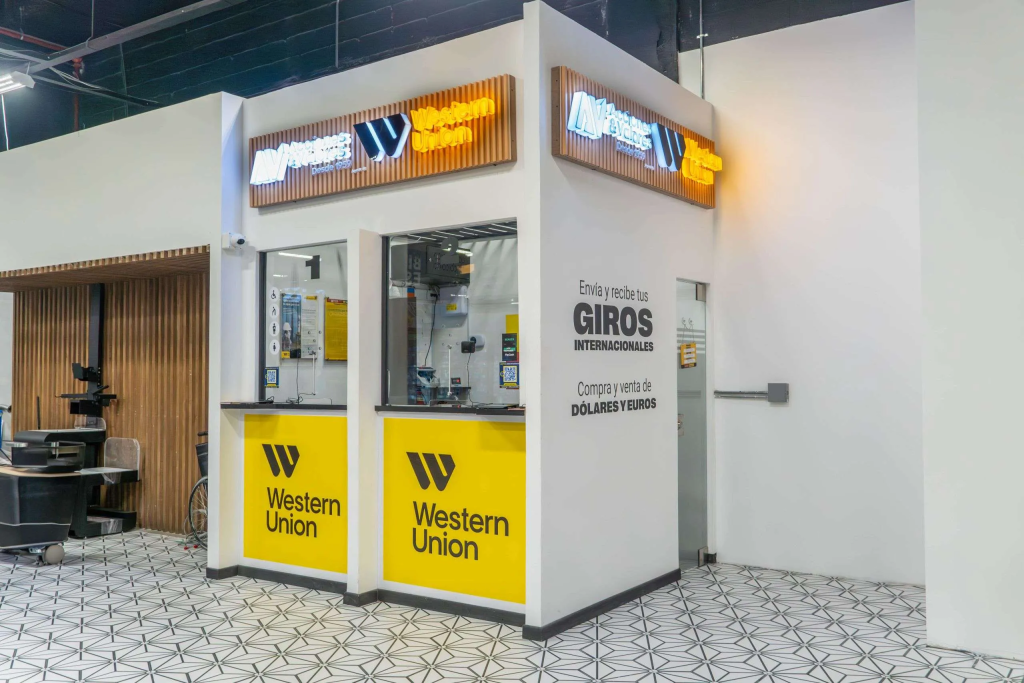
For small and medium transfers, services such as Wise, Remitly, Western Union and similar providers may be convenient, but availability and prices depend on the sending country. Run a live comparison each time rather than assuming the service that was cheapest last month is still the best.
Large transfers, property and investment
A property purchase or formal investment is different from sending money for living expenses. Colombia has foreign-exchange and investment-registration rules that can affect how money is brought into the country and later taken out.
Do not move a large sum based only on a blog post or advice from a seller. Use a regulated bank or foreign-exchange professional and get qualified Colombian legal and tax advice before transferring the money.
Building a Colombian credit history
A foreign credit score normally does not move with you. Colombian lenders look at local income, payment history, debts and information held by local credit-reporting systems.
A postpaid phone plan, internet contract, store credit or bank card can help establish a record when paid on time. This takes time. New residents should not expect an immediate mortgage or a high-limit credit card simply because they had excellent credit in another country.
Pay every bill on time.
Keep contact and address information updated.
Check statements for errors.
Avoid applying for several credit products at once.
Ask how a product reports to Colombian credit bureaus before taking it only to build credit.
Banking safety in Colombia
Banking apps and QR payments are convenient, but they also place a lot of value inside one phone. Protect the device as carefully as you protect your wallet.
Use a strong phone lock and biometric login.
Hide sensitive banking notifications on the lock screen.
Do not perform large transfers on public Wi-Fi.
Never share one-time security codes.
Open bank links through the official app or a saved bookmark, not a message from a stranger.
Keep enough cash or a backup card for app outages and dead batteries.
If your phone is stolen, contact the bank and mobile provider quickly. Lock the device remotely, change important passwords and check recent transactions.
Frequently asked questions
Can a tourist open a bank account in Colombia?
Sometimes, but tourists should not count on it. Some banks may accept a passport for certain products, while others require a visa, cédula de extranjería or supporting documents. A resident with a cédula has more options.
Can I use US dollars or euros in Colombia?
Not for normal daily spending. Use Colombian pesos. Tourist businesses that accept foreign cash usually apply an unattractive rate.
Which bank is best for foreigners?
There is no single answer. Bancolombia has a large network and is widely used, while BBVA, Davivienda and other banks may suit different customers. Compare branch access, fees, app quality and document requirements.
Can foreigners use Nequi?
Foreign residents aged 18 or older can currently register with a cédula de extranjería. Nequi also accepts the PPT in applicable cases. A passport alone is not listed as an accepted document for foreign registration.
What is Bre-B?
Bre-B is Colombia’s system for immediate transfers between participating banks and wallets. It works through the financial institution’s own app and uses simple payment keys.
Should I choose pesos or my home currency at an ATM?
Choose Colombian pesos. The home-currency option normally uses a less favourable conversion rate.
Do I need cash in Medellín?
Yes, but not a large amount. Cards work in many places, while cash is still useful for small businesses, markets, tips, rural trips and payment-system outages.
Banking in Colombia is manageable once you separate visitor needs from resident needs. Visitors mainly need reliable cards and cash access. Residents benefit from a local account, a digital wallet and Bre-B. The paperwork can be inconsistent, so verify the current requirements and bring more documents than you think you will need.