Updated for 2026
The quick version: Colombia uses the peso (COP), worth roughly 3,600 to the US dollar in 2026, though it moves a lot. Medellín is card-friendly, but you still need cash for taxis, small shops, markets, and tips. ATMs are the best way to get pesos, but the fees are high and the per-withdrawal limits are low, so take out the maximum each time, always choose to be charged in pesos (never accept the machine’s offer to “convert”), and use a card with no foreign fees. Tipping is light here: a 10% service charge is usually added at restaurants, and beyond that you just round up.
Table of Contents
Money in Colombia trips up a lot of first-timers, usually in small, avoidable ways: getting gouged at an ATM, carrying a 50,000 note nobody can break, or overthinking the tip. None of it is complicated once you know how the system actually works. I have lived in Medellín since 2019, and here is the practical version.
The Currency
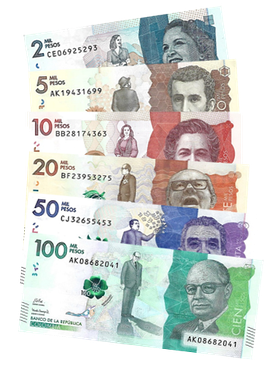
Colombia’s currency is the peso, written with a $ sign, which catches people off guard since it is the same symbol as the dollar. In 2026 the rate has been around 3,600 pesos to the US dollar, but it swings: over the past year it has run anywhere from about 3,500 to 4,400, so check a live rate before you travel rather than trusting an old number. The euro and the pound buy somewhat more, so adjust for your own currency.
The thing that throws people is the zeros. A coffee might cost 6,000 and a dinner 60,000. The quick trick: drop the last three zeros and divide by roughly 3.6 to get US dollars. So 50,000 pesos is about 14 dollars, and 10,000 is under 3. After a day you stop noticing.
Cash or Card?
In Medellín and the other big cities, cards work in most of the places a visitor spends money: restaurants, hotels, supermarkets, malls, larger shops. Visa and Mastercard are accepted almost everywhere, contactless is common, and American Express is hit or miss.
You will still want cash, though. Taxis, small and family-run restaurants, market stalls, street food, neighborhood shops, buses, tips, and almost everything in the smaller towns on a day trip run on cash. You will also need it to load a metro Cívica card. A good rule is to keep enough pesos for a day or two on you and lean on the card for the bigger stuff.
Two small things at the till. When you pay by card you may be asked “¿cuántas cuotas?”, how many installments, which is a local thing for Colombian cards. With a foreign card, just say “una”, one. And keep an eye on the card terminal, the datáfono: keep your card in sight, type your own PIN, and if the machine asks whether to charge you in pesos or your home currency, always choose pesos. That last point matters at the register the same way it does at the ATM. There is more on the card-swap trick in the scams guide.
One note for longer stays: the local payment apps everyone uses here, Nequi and Daviplata, are tied to Colombian bank accounts and ID, so as a visitor you will mostly be on cards and cash.
Getting Cash: ATMs
This is where Colombia quietly takes your money if you let it. Two things to understand.
First, the fees are high and the limits are low. Most bank ATMs charge a foreign-card fee of roughly 10,000 to 28,000 pesos per withdrawal, about three to eight dollars, and they cap each transaction somewhere between 400,000 and 2,000,000 pesos, often around 600,000. Because the fee is flat, taking out a small amount is terrible value, so withdraw the maximum the machine allows each time.
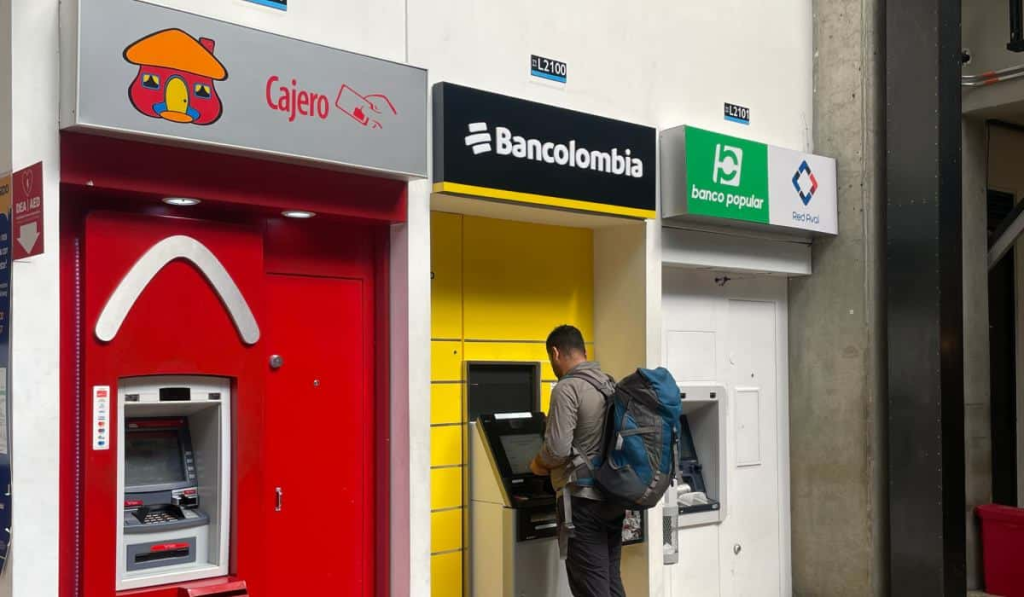
Second, and this is the big one: when the ATM offers to “convert” the amount or charge you in your home currency, always decline and choose pesos. Accepting hands the ATM a markup of six percent or more on top of everything else. The travelers who report being charged ten or fifteen percent at a Colombian ATM almost always accepted that conversion. Decline it, and your own bank does the conversion at a far better rate.
Banks shift their fees often, and the same machine can behave differently week to week, but as a rough current guide: Bancolombia and BBVA tend to be the worst combination of high fee and low limit, while Banco de Bogotá, Servibanca, Banco Popular, and Banco Caja Social are often cheaper or allow more per withdrawal. Scotiabank Colpatria belongs to the Global ATM Alliance, so if your home bank is a member, you may get fee-free withdrawals there. It is always worth reading the fee the screen shows before you confirm, and cancelling if it is steep.
The real fix, if you can set it up before you travel, is a debit card that charges no foreign-transaction fee and refunds ATM fees. Several US accounts do this, and it turns the whole problem into a non-issue.
Finally, treat ATMs the way you would anywhere in the city: use machines inside a bank branch or a mall, in daylight, cover the keypad, and take only what you need. If your card gets declined, do not panic, just try a different ATM or a different bank, since a card that fails at one machine often works fine at the next. The wider safety logic is in the Medellín safety guide.
Exchanging Cash
For most people, pulling pesos from an ATM beats exchanging cash. The currency desks at the airport and in hotels give poor rates, so avoid changing large amounts there.
If you do bring cash, US dollars are the easiest to exchange. Use a proper casa de cambio or a bank, and never the men offering to change money on the street, who deal in bad rates and counterfeit notes. When you have pesos, try to break the big 50,000 and 100,000 notes inside banks or larger stores, because taxis and small vendors often cannot change them, and the largest notes are also where fake bills turn up. Ask for billetes pequeños, small bills, and keep a stash of them for taxis and tips.
Tipping (Propina)
Colombia is not a heavy tipping culture, which comes as a relief if you are used to the US. Here is the whole picture.
At sit-down restaurants, a 10% service charge, the propina voluntaria, is usually added to your bill, and the server will ask whether you want to include it, often with a simple “¿con propina?” or “¿desea incluir el servicio?”. Saying yes is normal and expected, and you do not leave anything extra on top. If the service was genuinely bad, you are within your rights to decline it.
Everywhere else, it is lighter. In cafés, bars, and casual spots, tipping is not expected, though rounding up or leaving the change is a nice gesture. Taxi drivers are not tipped, but people round up the fare. Free walking tours are the real exception: they run entirely on tips, so tip the guide properly, somewhere around 20,000 to 50,000 pesos per person depending on the tour. Paid guides, drivers, hotel housekeeping, and porters all appreciate a small tip, but none of it is obligatory.
Frequently Asked Questions
What currency does Medellín use?
The Colombian peso (COP), worth roughly 3,600 to the US dollar in 2026, though the rate moves a lot, so check it before you travel.
Should I bring cash or rely on ATMs?
ATMs are the best way to get pesos. Bring a small amount of US dollars as a backup, but you do not need to carry large sums of cash.
Are there ATM fees in Colombia?
Yes, and they are high, usually three to eight dollars per withdrawal, with low per-transaction limits. Take out the maximum each time, always choose to be charged in pesos rather than your home currency, and ideally use a card that refunds ATM fees.
Should I accept the ATM’s offer to convert to my currency?
No. Always choose pesos. Accepting the conversion adds a markup of six percent or more.
Can I pay by card in Medellín?
Widely, in the city. Carry cash for taxis, small and local businesses, markets, tips, and the smaller towns outside Medellín.
Do I need to tip in Colombia?
Lightly. A 10% service charge is usually added at restaurants, which you accept; elsewhere you simply round up. Free walking tour guides should be tipped well.