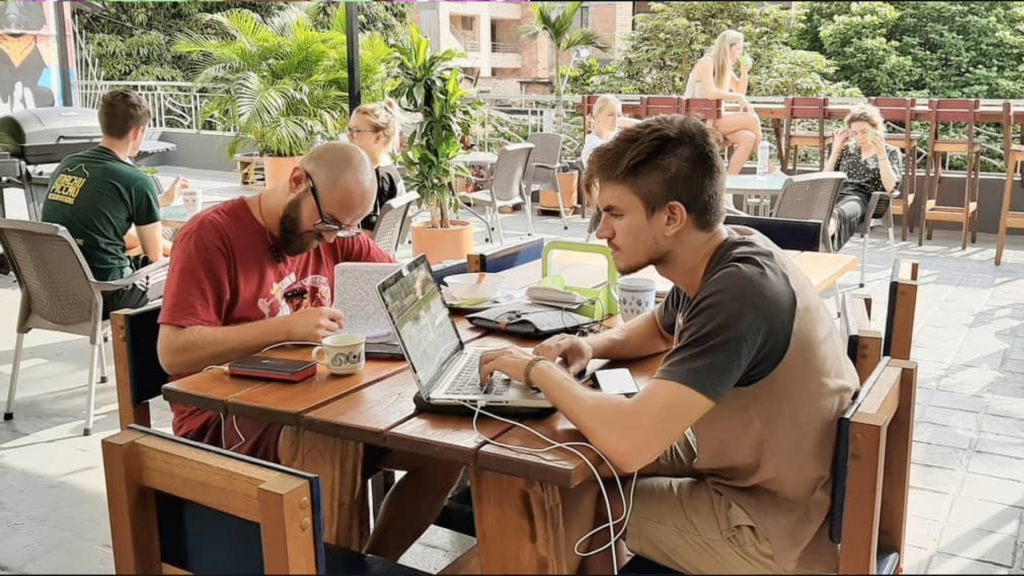
A practical guide for visitors, remote workers, retirees, partners and people planning a longer stay
| The quick version: Many visitors from visa-exempt countries enter Colombia for up to 90 days and can apply for one extension, without exceeding 180 days in the same calendar year. Longer stays normally require a Visitor (V), Migrant (M) or Resident (R) visa. The right option depends on why you are staying, where your income comes from and whether you plan to work in Colombia. |
| Important: Visa rules, fees and document requirements can change. Use this guide to understand the process, then check the exact category on the Colombian Ministry of Foreign Affairs website before applying. For complicated cases, speak to a qualified Colombian immigration lawyer. |
Colombian Visa Overview
Getting a Colombian visa is not impossible, but it rewards people who are organised. The online form is simple enough. The harder part is making sure every document is current, readable and suitable for the exact visa category.
I first went through the process in 2019. My application led to an interview in Bogotá, followed by a system problem and a second trip. During a later renewal, an application briefly seemed to disappear from the system. Both problems were solved, but the experience taught me to keep copies of everything and never leave a visa application until the last minute.
Do you need a visa to visit Colombia?
Citizens of many countries, including most of Europe, the United States, Canada and Australia, do not need to arrange a tourist visa before a short visit. An immigration officer normally gives them a Permiso de Ingreso y Permanencia when they enter.
The officer decides the authorised stay. It is often up to 90 days, but travellers should check the date or number of days recorded at entry rather than assuming they received the maximum.
Before booking, check whether your passport is visa-exempt on the official Colombian visa website.
Extending a tourist stay
A visa-exempt visitor with a valid entry permit can normally request one extension of up to 90 additional days. The total time cannot exceed 180 days, continuous or separate, within the same calendar year.
The extension is called a Permiso Temporal de Permanencia, or PTP. It is requested online through Migración Colombia. The listed 2026 fee is COP 150,000, although fees can change.
Apply while your current permission is still valid.
Do not assume that submitting the form automatically extends your stay.
Keep the approval document with your passport.
Track total days by calendar year, not only by each trip.
Leaving and returning does not reset the annual 180-day limit.
The current extension process is explained on the Migración Colombia PTP page.
The three Colombian visa categories
| Category | Main purpose | Typical validity | Residence path |
| V – Visitor | Temporary stays such as remote work, study, medical treatment or business | Varies by category; some last up to two years | Usually does not build time toward residence |
| M – Migrant | People who plan to establish themselves through work, family, pension or investment | Usually up to three years | Many M visas build qualifying time toward an R visa |
| R – Resident | Permanent residence after qualifying family links or accumulated time | Resident status, with visa transfer required every five years | Already permanent residence |
Common visa options for foreigners
Digital Nomad Visa (V)
This is the most obvious option for remote employees, freelancers and online business owners who earn their income outside Colombia. It can be granted for up to two years.
The applicant must hold a passport from a country that is exempt from a short-stay visa.
The work must be for foreign clients, employers or businesses.
Applicants must show income of at least three Colombian minimum monthly wages during the previous three months.
Health insurance must cover the planned stay in Colombia.
The visa can support applications for eligible dependent family members.
It does not permit paid work for a Colombian person or company.
A traveller who is visa-exempt can also work remotely during a short tourist stay, provided the work does not create Colombian salary payments and the person remains within the normal visitor limit. The visa becomes useful when you want to stay longer or need formal proof of status.
Read the related Medellín digital nomad guide for neighbourhoods, internet and day-to-day life.
Student Visa (V)
Students accepted by a recognised Colombian institution may apply for a Visitor visa for study. Requirements depend on the course, institution and level of study. You will normally need proof of enrolment, financial support and health coverage.
Do not enrol in a course only because someone promises it will guarantee a visa. Confirm that the institution and programme meet the current Cancillería requirements before paying a large deposit.
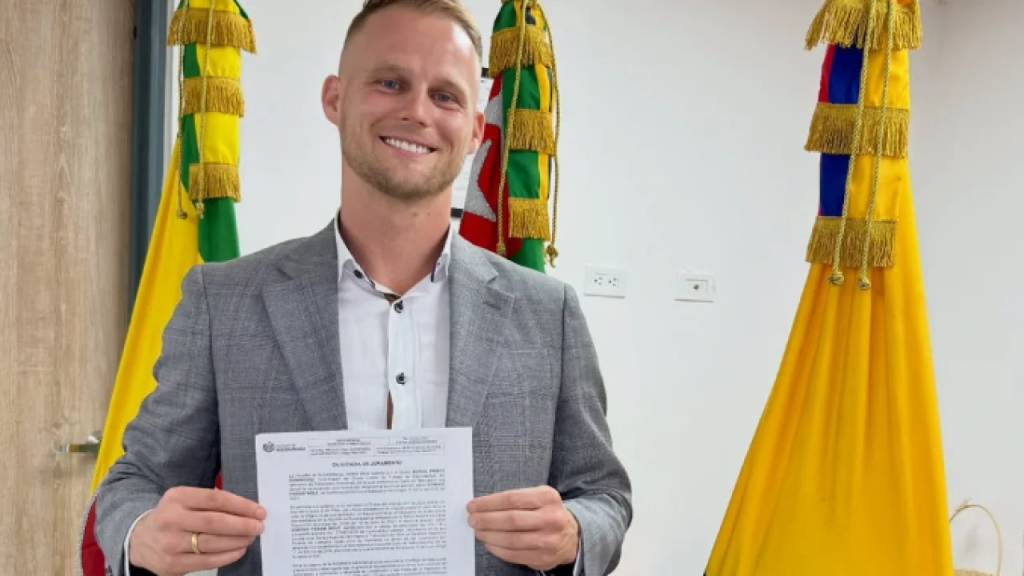
Spouse of a Colombian Visa (M)
A foreigner who is legally married to a Colombian and plans to live with that spouse in Colombia can apply for a Migrant visa. It can be issued for up to three years and gives the holder open permission to work.
The Colombian marriage record generally must have been issued within the previous three months.
The Colombian spouse signs a request confirming the relationship and effective cohabitation.

Both partners may need migration records and may be interviewed.
The authority can ask for additional proof that the relationship is genuine.
A permanent-partner visa is a separate route. The civil union must be formally documented, and the document supporting the union generally must show that it was formalised more than one year before the application.
Pension Visa (M)
This visa is for people receiving a lifetime pension from a government or private pension fund. The required monthly pension is at least three Colombian minimum monthly wages.
The pension certificate normally needs an apostille or other required legalisation and an official Spanish translation when applicable.
Applicants need police or criminal records from the relevant country or countries.
A medical certificate and health coverage are required.
The visa can be issued for up to three years.
It does not give permission to work in Colombia.
It can build time toward residence after five years as an eligible M-visa holder.
Worker Visa (M)
A Colombian company can support a Migrant worker visa when it has offered a qualifying employment contract. The permission is tied to the job and employer listed in the visa rather than being a general open work permit.
The employer must provide corporate and financial documents, and regulated professions may require recognition of qualifications or a professional licence. Losing or changing the job can affect the visa, so do not treat it like independent residency.
Business owner or professional visa (M)
Colombia has Migrant categories for company owners, shareholders and qualifying independent professionals. These visas require more than simply registering a company or saying you are self-employed.
The company, investment, professional qualifications and income must meet the rules for the chosen category. A lawyer or accountant can be useful here because company registration, foreign-investment registration, tax and visa requirements overlap.
Investor Visa (M)
The Migrant investor visa is available for qualifying direct investment or property ownership. The thresholds are linked to Colombia’s minimum wage, so the peso amount changes each year.
Registered direct foreign investment must exceed 650 minimum monthly wages.
A property investment must generally be worth at least 350 minimum monthly wages.
The investment must be registered correctly with Banco de la República.
A property must be held in the applicant’s own name.
Health coverage and proof of money for living costs are also required.
The investment must be maintained while the visa remains valid.
Buying an apartment does not automatically produce a visa. The purchase price, ownership documents and foreign-investment registration all matter.
Mercosur and Andean Migrant Visas
Citizens of certain South American countries may qualify through the Mercosur Residence Agreement or the Andean Migratory Statute. These routes can be simpler than employment or investment visas and may lead to residence after a shorter qualifying period.
Eligibility depends on nationality and reciprocity. Check the current list rather than assuming every Latin American passport qualifies.
Resident Visa (R)
The Resident visa is intended for foreigners who have reached permanent-residence status. Common routes include qualifying family ties and time accumulated on eligible Migrant visas.
The required time depends on the category. The current official table lists two years for some parent and regional-agreement visas, three years for spouses of Colombian citizens, and five years for several other categories, including workers, pensioners and investors.
An R visa gives open permission to work.
The visa must be transferred or renewed in the electronic system every five years.
It can end automatically after two continuous years outside Colombia.
Meeting the minimum time does not guarantee approval.
Continuity matters: gaps between visas may stop time from counting.
How to apply for a Colombian visa
1. Choose the exact visa category
Start with the official list of visa types. Do not choose a category only because it sounds close to your situation. Each one has its own purpose, work permission and supporting documents.
Use the Cancillería visa types page as the main source.
2. Collect the documents before opening the form
The exact list changes by visa, but applications commonly use some of the following:
A valid passport and a copy of its biographical page
A recent 3 x 4 cm colour photograph with a white background
Bank statements or proof of regular income
Employment, client, pension, study or investment documents
Health insurance valid in Colombia
Marriage, civil-union or birth records
Police or criminal-record certificates
Apostilles or legalisation for foreign public documents
Official Spanish translations where required
Names, passport numbers, dates and amounts must match. A small inconsistency can lead to a request for more information or a refusal.
3. Submit the application online
Colombian visa applications are submitted through the SITAC online system. The government recommends using a desktop or laptop. The current system requires a JPG photograph and readable PDF documents, with a combined upload limit of 5 MB.
The official form is available through SITAC.
Do not go to the visa office in Bogotá unless the visa authority specifically asks you to appear. The normal process continues online, although an interview can be requested in person, by phone or by video.
4. Pay the study fee and watch your email
The application normally has two possible charges: a study fee and, after approval, an issuance fee. The amount depends on the category, nationality and location of the application.
The legal study period can be up to 30 calendar days. Requests for clearer documents or extra evidence can extend the process. Check spam folders and answer through the official platform rather than sending documents to unverified email addresses.
5. Pay the issuance fee after approval
Approval is not the final step. The current official payment guidance gives applicants up to 15 calendar days to pay the visa issuance fee. Missing that deadline can cause the approval to expire.
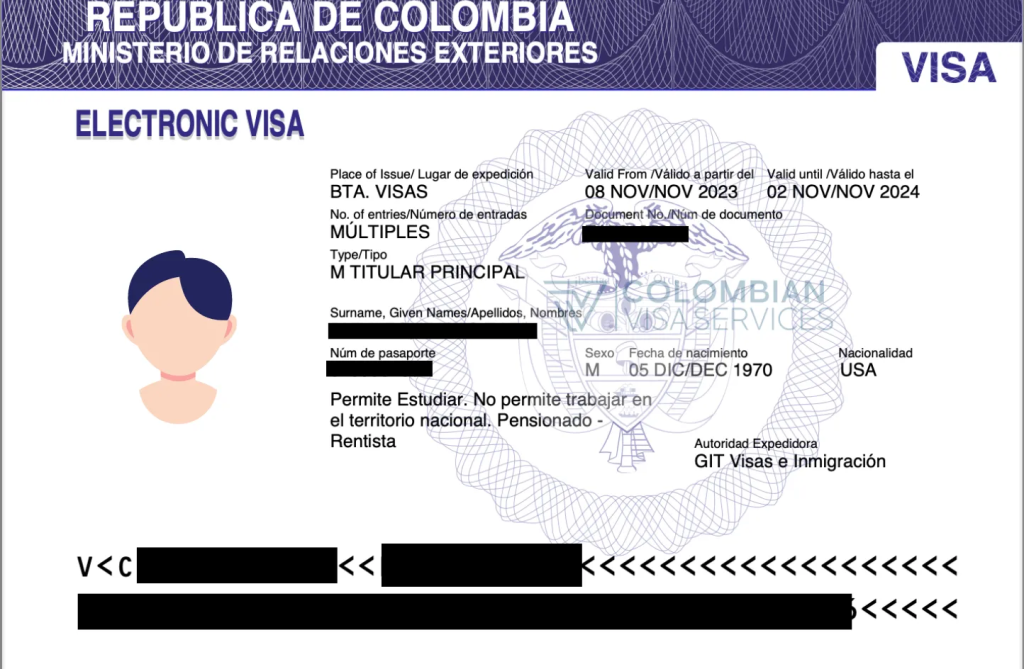
6. Check the electronic visa carefully
Read the name, passport number, visa category, validity, work permission and number of entries. Report an error immediately. Do not wait until you are at an airport, bank or immigration appointment.
7. Register and obtain a cédula when required
Foreigners over age seven who hold a visa valid for more than three months generally need a cédula de extranjería. The first application must be started within 15 calendar days after entering Colombia with the visa, or within 15 days after the visa is issued when it is granted inside Colombia.
The process starts online and ends at a Migración Colombia service centre for fingerprints and a photograph. The general 2026 first-time fee is COP 294,000.
See the current steps on the Migración Colombia cédula page.
Documents from outside Colombia
Foreign documents create many of the delays. A birth certificate, marriage record, pension certificate or police record may need an apostille or consular legalisation before Colombia accepts it.
Documents that are not in Spanish may also require an official translation. The order matters: depending on the document, the apostille or legalisation may need to be completed before the translation.
Order civil and police records early.
Check whether the visa category limits how old a document may be.
Use clear scans, not photographs with shadows or missing edges.
Keep the original, apostille and translation together.
Do not edit, compress or combine files until text becomes unreadable.
Do you need a visa agency or lawyer?
A simple digital nomad or pension application can often be handled without an agency when the documents are straightforward. Professional help becomes more valuable when the case involves a company, investment, missing records, a previous refusal, an overstay or uncertainty about the correct category.
A good adviser should explain the legal basis of the application and tell you which official documents are required. Be cautious with anyone promising guaranteed approval, a special contact inside the government or a way to hide facts.
Common mistakes to avoid
Waiting until the last week: Applications can take up to 30 calendar days, and foreign documents may take much longer to obtain.
Applying for the wrong category: A strong application in the wrong category can still fail.
Using old financial figures: Income and investment thresholds are tied to the current Colombian minimum wage.
Uploading unclear files: The officer needs to read every page, seal, apostille and signature.
Letting visas overlap incorrectly or expire: Gaps can affect legal status and the time counted toward residence.
Assuming a salvoconducto builds residence time: It can protect temporary legal status in certain cases, but it does not replace continuity between qualifying visas.
Working outside the visa permission: Some visas permit only foreign remote work, one employer or one professional activity.
Forgetting the cédula deadline: Eligible visa holders generally have 15 days to start the process.
Spending too long outside Colombia: M visas can end after more than 180 continuous days abroad within a 365-day period; an R visa can end after two continuous years abroad.
Frequently asked questions
Can I apply for a Colombian visa while I am in Colombia?
Many visa applications can be submitted while you are legally in Colombia. The online system asks where you are applying from, and the authority may assign the case to Bogotá or a Colombian consulate. Your current permission should remain valid while you plan the application.
Can I work in Colombia on a tourist permit?
A tourist permit does not give normal permission to take a Colombian job. Visa-exempt remote workers can perform foreign-paid remote work during a short stay under the conditions set by the current rules, but paid work for a Colombian person or company normally needs an appropriate visa.
Does a Digital Nomad Visa lead to permanent residence?
Normally no. It is a Visitor visa and does not usually accumulate the Migrant-visa time needed for an R visa.
Can I buy property and automatically receive a visa?
No. The property must meet the current value threshold, be owned correctly and have its foreign investment properly registered. You still need to apply and meet the other visa requirements.
Can a visa be refused even if I submit every listed document?
Yes. Colombian visa decisions include discretionary review. The authority can request additional information, conduct an interview or decide that the evidence does not prove the purpose of the application.
What happens if I overstay?
An overstay can lead to a fine and immigration procedures. Do not assume that paying a fine automatically fixes the situation. Contact Migración Colombia or a qualified immigration lawyer before booking travel or submitting another application.
Where should I check for the latest rules?
Use the Ministry of Foreign Affairs visa portal for visa categories and requirements, and Migración Colombia for tourist extensions, visa registration and cédulas.
| The Colombian visa system is manageable when you choose the right category, prepare documents early and keep a complete record of every submission and payment. The fastest application is usually the one that gives the officer no reason to ask what a document means or where a number came from. |