Medellín and Colombia, from someone who lives here
Medellín for Digital Nomads: The Complete 2026 Guide
The quick version: Medellín remains a strong remote-work base when you choose the apartment carefully, keep mobile data as a backup and arrive with realistic expectations. Laureles is the best all-round base for many people, while Manila offers an easier first landing and Envigado suits a quieter long stay. A comfortable solo budget is often around COP 6.5-10 million a month. Visit for one month before signing a long lease, and do not confuse a tourist stay, a Digital Nomad Visa and Colombian tax residency.
I have lived in Medellín since 2018. During that time, the city has changed from a place mentioned quietly in remote-work groups into one of Latin America’s most visible digital-nomad destinations.
The basic appeal is real: mild weather, useful public transport, widespread fixed internet, cafés, coworking spaces and easy domestic flights. The weaknesses are equally real: rising furnished rents, noise, occasional internet or power problems, bureaucracy and a social scene that can become an English-speaking bubble.
This guide focuses on making remote work function. The separate neighborhood guide covers where to live in more detail, while the broader moving guide covers healthcare, long-term housing and everyday life.
Table of Contents
Medellín for digital nomads at a glance
Question
Practical answer
Best all-round neighborhood
Laureles
Easiest first landing
Manila or another quieter part of El Poblado
Quieter long-term option
Envigado
Suggested trial stay
At least one month
Comfortable solo budget
Roughly COP 6.5-10 million per month
Time zone
UTC-5 all year, with no daylight-saving change
Internet rule
Verify the exact apartment; do not trust a neighborhood average
Backup
Local SIM or eSIM with enough data for tethering
Long-stay visa
Visitor Visa V for Digital Nomads, when eligible
Main risk to planning
Rent, tax residency and relying on one internet connection
Is Medellín still good for remote work?
Yes, but not because it is the cheapest city on the internet. Medellín works because several parts of daily life fit together: you can find a furnished apartment, work from home or a professional office, reach many neighborhoods without a car and build a social routine quickly.
The city is particularly convenient for people working with North American clients. Colombia remains on UTC-5 throughout the year. The time difference with Europe is less comfortable, often pushing European meetings into the morning there and the afternoon or evening in Colombia.
Medellín works well for…
Remote employees and freelancers with stable income
People who can work from an apartment but want coworking several days a week
North American time zones
Spanish learners who want everyday practice
People who value mild weather and an active social life
Travellers using one city as a base for longer trips around Colombia
It may not work well for…
People who need guaranteed silence and uninterrupted connectivity
Workers with confidential calls who plan to use busy cafés all day
Anyone expecting old blog-post prices in El Poblado
People unwilling to learn basic Spanish
Those who find ordinary city security habits exhausting
Anyone planning to stay more than six months without tax advice
Internet: check the apartment, not the neighborhood
Fixed internet is widely available in the established remote-work neighborhoods, and many buildings have fibre or other high-speed plans. That does not mean every apartment has a good connection.
The building may have modern service while the host uses the cheapest plan, an old router or a weak Wi-Fi setup. A connection that looks fast beside the router can fail in the bedroom where the desk is located.
What to ask before booking
A current speed-test screenshot taken inside the exact apartment
The internet company and plan speed
Whether the router is inside the apartment or shared
Where the desk is in relation to the router
Whether an Ethernet connection is possible
How the host handles an outage
Whether the building has a generator for common areas or lifts
Ask for a test showing download speed, upload speed, latency and the date. Upload speed matters for video calls and large files. Latency matters when your work involves live audio, remote desktops or interactive systems.
Build a backup before the first workday
A local SIM or eSIM is the simplest backup. Test tethering before an important call, keep the phone charged and know whether your plan limits hotspot use.
For important work: Do not rely on one apartment Wi-Fi network. Keep mobile data ready and identify one coworking space within a short ride before your first deadline or client call.
Coworking spaces or cafés?
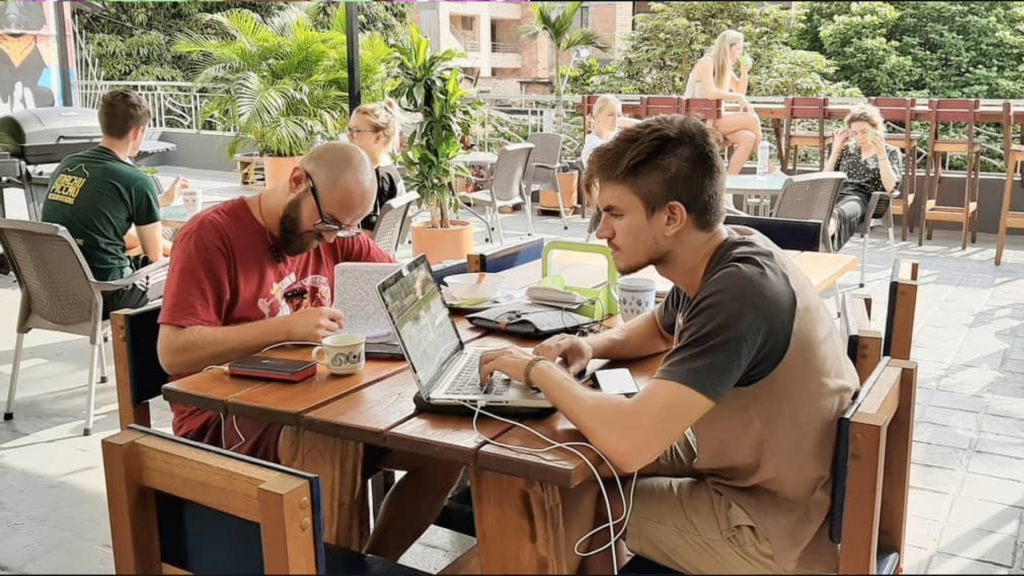
A café is useful for a short writing session, an informal meeting or a change of scenery. It is a poor substitute for a real office when you need several hours of calls, a guaranteed seat, a monitor or privacy.
Option
Best for
Main limitation
Apartment
Deep work, privacy and predictable routines
Isolation, poor furniture and no backup
Coworking
Calls, meetings, community and full workdays
Monthly cost and commuting
Café
One or two quiet hours and informal work
Noise, weak Wi-Fi, limited outlets and no privacy
Coliving
A quick social start and short stays
Higher cost and less separation between work and social life
How to choose a coworking space
Buy a day pass before committing to a month.
Work during your normal hours, not only during a quiet tour.
Check phone booths and rules for calls.
Test Wi-Fi at the desk you would actually use.
Ask about opening hours, weekends and Colombian holidays.
Check whether tax is included in the quoted price.
Choose a place close enough to use during heavy rain.
Coworking businesses change more quickly than neighborhoods. Tinkko currently operates its Milla de Oro and Self locations in El Poblado, with flexible work areas, meeting rooms and private offices. Independent spaces operate in Laureles, Manila and other areas, but verify the current address, plans and opening hours directly.
Laureles is relatively flat, walkable and full of cafés, gyms, supermarkets and restaurants. It is easier to build an ordinary routine here than in the steepest parts of El Poblado.
Avoid apartments directly beside La 70 or loud entertainment streets when sleep and calls matter. A few blocks can make the difference between a calm workday and music through the window.
Manila: the easiest first landing
Manila gives newcomers access to English-speaking services, coworking, restaurants and the Poblado Metro station without placing them in the busiest part of Parque Lleras.
It remains expensive compared with more local neighborhoods, and short-term rentals can be compact. It is often better as a first month than as the final long-term choice.
Envigado: quieter and more local
Envigado suits people staying several months who want a normal residential rhythm. It has restaurants, supermarkets and Metro access, but fewer spaces designed entirely around international remote workers.
Some areas are steep or far from a station. Check the exact walk rather than relying on the municipality name.
Sabaneta and Belén: value with trade-offs
Sabaneta can offer a calmer routine but adds travel time to central Medellín. Belén can provide better value and useful transport, although the remote-work community is smaller and the quality of individual blocks varies.
The biggest mistake is converting one cheap local expense into a claim that the entire city is cheap. Rent, furnished housing, imported food and frequent app-based transport can raise the total quickly.
Lifestyle
Housing
Work setup
Rough monthly total
Careful
Room or modest apartment outside premium blocks
Mostly home, occasional day pass
COP 4.5-6.5 million
Comfortable
Good furnished one-bedroom
Home plus regular coworking
COP 6.5-10 million
Premium
High-end Poblado apartment or coliving
Full membership, frequent rides and dining
COP 10 million or more
These are planning ranges, not a price list. Exchange rates move, and two people with similar apartments can spend very different amounts. Start with a short rental and track one real month before deciding what long-term life costs.
Renting without damaging your work routine
Book a temporary place before signing a long lease.
Visit the street during work hours and late at night.
Open the windows and listen for construction, bars, dogs and traffic.
Check the chair and desk height rather than trusting the words ‘workspace included.’
Ask whether utilities and building administration are included.
Confirm guest, delivery and coworker-access rules.
Do not transfer a large deposit to an unverified owner or listing.
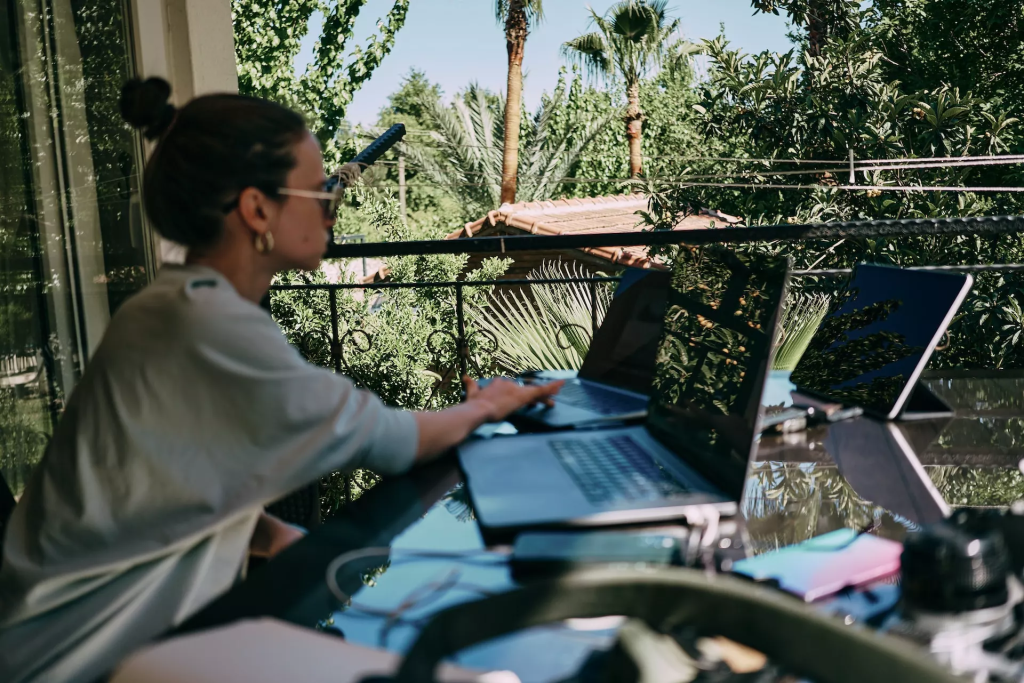
A beautiful balcony is less useful than a comfortable chair, quiet bedroom and stable connection. Remote workers often pay for the photograph and then spend the month trying to work at a kitchen stool.
Visa-exempt nationalities can normally perform qualifying foreign-paid remote work during a short stay, provided they remain within the visitor limit and do not receive Colombian salary payments.
The Visitor Visa V for Digital Nomads is intended for a longer stay. It may be granted for up to two years, but approval is not automatic.
Main requirements in 2026
A passport from a nationality or territory exempt from a short-stay visa
A letter or contract proving remote work for one or more foreign businesses, or proof of ownership in a foreign company
Bank statements showing at least three Colombian minimum monthly wages in income during the previous three months
For 2026, three minimum wages equal COP 5,252,715
Health insurance covering Colombia for accidents, illness, maternity, disability, hospitalisation, death and repatriation
No paid work for a person or business domiciled in Colombia
The visa is a Visitor visa. It does not itself create temporary or permanent resident status, and it is not normally the route for someone whose main goal is accumulating time toward permanent residence.
A short visa, long visa and Colombian tax residence answer different questions. Someone can comply with immigration rules and still create a tax obligation.
Spending more than 183 days in Colombia during any period of 365 consecutive days can make a person a Colombian tax resident. The treatment of foreign income, companies and assets depends on individual facts and international rules.
Before a long stay: Speak to a Colombian tax professional before crossing the 183-day threshold. Do not assume that foreign clients, a foreign bank account or a Digital Nomad Visa remove Colombian tax questions.
Money, banks and local payments
A foreign card and Colombian cash are enough for a short stay. A local account or digital wallet becomes more useful when you pay rent, split bills, use local transfers or remain for several months.
Opening an account can be easier with a cédula de extranjería, proof of address and proof of income. Requirements differ by provider. Do not build your first week around receiving a local bank account immediately.
A person can work, eat and socialise in parts of El Poblado without using much Spanish. That is convenient during the first week and limiting after the first month.
Landlords, building staff, technicians, drivers and government offices may speak little English. Basic Spanish makes housing, banking and problem-solving much easier and reduces dependence on services marketed only to foreigners.
Take a regular class rather than relying only on an app.
Use Spanish for simple transactions before switching to English.
Join an activity with repeated local attendance, such as a sport or class.
Do not make every social event a foreigner-only meetup.
Pay fair prices without assuming every price quoted in pesos is cheap.
Remote workers carry exactly the items opportunistic thieves want: phones, laptops, headphones and cards. The most important habit is deciding where those devices are visible.
Do not work on a laptop at an open street table without paying attention to the surroundings.
Keep the phone away while standing beside traffic or waiting at a corner.
Use an ordinary bag rather than advertising expensive equipment.
Avoid leaving a laptop unattended while ordering.
Use known transport after late events or coworking sessions.
Back up work and enable device tracking before travelling.
Keep recovery codes somewhere separate from the phone and laptop.
El Poblado and Laureles are not the bargains described in old nomad guides. Compare local long-term prices with furnished monthly offers before deciding whether a listing is reasonable.
Noise can ruin a good apartment
Construction, motorcycles, bars, dogs and music are common. Double glazing is not standard, and a high floor is not always quiet.
The social scene can become repetitive
It is easy to meet people and surprisingly easy to repeat the same introductions every week. Longer stays become more satisfying after building friendships and routines outside temporary nomad events.
Air quality changes during the year
The valley can trap pollution during seasonal transition periods. People with respiratory conditions should monitor local air-quality information and consider location carefully.
Bureaucracy is not remote-worker friendly by default
An international career does not make Colombian paperwork disappear. Visa, banking, building and rental processes may require in-person steps, local documents or patient follow-up.
A practical first-week setup
Arrive with a working eSIM or roaming plan.
Use a short-term rental rather than signing a long lease.
Test the apartment internet from the actual desk.
Test mobile tethering before the first important call.
Buy day passes at two coworking spaces.
Learn the nearest Metro station and a reliable nighttime ride option.
Get a local SIM when it offers a better backup.
Join one recurring class, coworking event or language exchange.
Track spending in pesos from the first day.
Review visa and tax timing before extending the stay.
A workable weekly routine
The people who enjoy Medellín longest usually stop treating every day as travel. A routine protects both work and the reasons for being here.
Two or three deep-work days at home
One or two coworking days for calls and social contact
One Spanish class or recurring local activity
Exercise close to home rather than crossing the valley
Yes. It offers good infrastructure, mild weather, public transport and an established remote-work community. The city is less attractive for people expecting extremely low rent or guaranteed quiet.
How much should a digital nomad budget?
A comfortable solo budget is often around COP 6.5-10 million a month. A careful lifestyle can cost less, while premium furnished housing in El Poblado can push the total above COP 10 million.
Is apartment internet reliable?
It can be excellent, but reliability is specific to the building, provider, router and apartment. Ask for a current test and keep mobile data as a backup.
Which neighborhood is best?
Laureles is the best all-round choice for many people. Manila is the easiest first landing, while Envigado suits a quieter long stay. The exact street matters more than the neighborhood label.
Can I work from cafés all day?
Some cafés tolerate laptops, but a long call or full workday is better in a coworking space or apartment. Buy regularly, avoid taking a large table during busy periods and do not assume the Wi-Fi is suitable for confidential work.
Do I need the Digital Nomad Visa?
Not necessarily for a short qualifying stay when your nationality is visa-exempt. A longer stay may require the visa or another appropriate status. The work must remain foreign-paid, and the visa does not allow paid activity for a Colombian person or company.
Does the Digital Nomad Visa lead to residence?
It is a Visitor visa and does not itself provide temporary or permanent resident status. People seeking a residence path should examine qualifying Migrant visa categories.
Is Medellín in a convenient time zone?
It is very convenient for much of North America because Colombia stays on UTC-5. European schedules can require later working hours, especially during northern summer.
Should I sign a long lease immediately?
No. Spend at least a month testing the neighborhood, noise, internet and daily travel before committing. A temporary rental is expensive, but ending the wrong long lease can cost more.
Medellín is a strong remote-work base when you build the stay around work rather than treating work as the interruption. Verify the apartment, keep a backup connection, choose a neighborhood for your daily routine and understand the visa and tax clocks before they become urgent.