The quick version: Medellín is the “City of Eternal Spring” — around 22°C (72°F) year-round, with no real seasons, so there is no bad time to come weather-wise. What actually changes month to month is rain, crowds, and prices. The driest, easiest weather falls roughly December to March and June to August. The wettest stretches are April–May and September–November, though even then the rain is usually a short afternoon shower, not a washout. Two dates are worth planning around either way: the Feria de las Flores in early August, the city’s biggest party, and the Christmas lights in December. And if you are sensitive to air pollution, the two windows to skip are March–April and September–October.
The honest answer to “when should I visit Medellín?” is that it matters less here than almost anywhere else you could go. The city sits close to the equator at around 1,500 meters (4,900 feet), high enough to shave the tropical heat off but not so high it ever gets cold. The result is the nickname everyone uses: La Ciudad de la Eterna Primavera, the City of Eternal Spring. I have lived here since 2019 and the weather genuinely does not change much from one month to the next. So the question is not really about temperature. It is about rain, festivals, and how many other people are here when you are.
There Are No Seasons, Just Wet and Dry
Because Medellín is so close to the equator, it does not get the four seasons you might be used to. Daylight runs about twelve hours all year, the average temperature hovers around 22°C (72°F), daytime highs sit near 28°C (82°F), and nights cool to around 16 or 17°C (60°F). That is true in January and it is true in July.
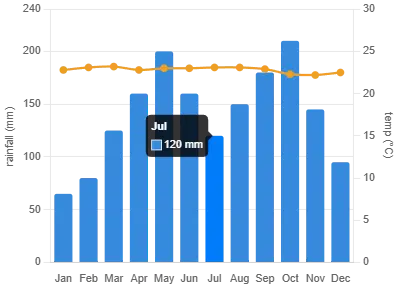
What does change is the rain. Medellín has two rainier seasons, roughly April to May and September to November, and two drier ones, roughly December to March and June to August. Locals call the dry stretches verano (summer) and the wet ones invierno (winter), even though the temperature barely moves either way. Here those words mean sun and rain, not hot and cold.
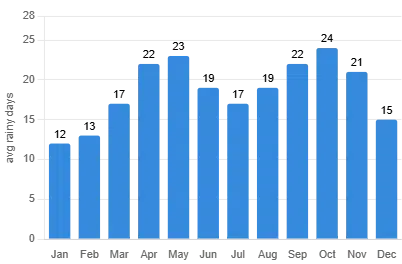
A few things worth knowing about that rain, because it scares people off more than it should. Even in the wettest months, the rain usually comes as a heavy afternoon or evening shower that passes in an hour or two, often over only part of the city, and you still get four to five hours of sunshine on an average day. Do not trust the weather app, either. Sitting in a bowl of cloudy mountains, Medellín’s forecast shows rain almost every single day of the year, which is technically true and practically useless. The driest month is January; the wettest are usually April, May, and October. Rain is simply not a good reason to stay away.

The Best Months, Depending on What You Want
There is no single best time, only the best time for what you are after.
For the clearest weather and the outdoors. December through March and June through August give you the most reliable sun, which matters if your plans lean toward day trips to Guatápe and the Antioquia towns, paragliding, or hiking. Mountain views are clearest, and you are far less likely to lose an afternoon to rain.
For the biggest experience. Two months put on a show. Early August is the Feria de las Flores, the city’s flagship festival, and December brings the Christmas lights along the river. Both are covered below, and both are reasons in themselves to time a trip.
For fewer crowds and lower prices. The wetter, quieter stretches, especially late September through November or the April–May rains, tend to mean cheaper flights, easier hotel availability, and calmer neighborhoods. You trade a higher chance of an afternoon shower for a city that is less booked out and less expensive. For a lot of travelers that is a good deal.
The one honest caveat: air quality. Twice a year, roughly in March–April and again in September–October, the Aburrá Valley traps pollution against the surrounding mountains and the air quality drops, sometimes sharply. It is the one genuine downside to Medellín’s geography, and if you have asthma or are sensitive to smog, these are the windows to plan around. There is more on this in the Medellín safety guide.
Feria de las Flores (Early August)
If you can only line your trip up with one event, make it this one. The Feria de las Flores is the biggest party in Colombia, and in 2026 it runs from late July through August 9, its 68th edition, with more than a hundred public events spread across the city. The climax is the Desfile de Silleteros on the final Sunday, August 9, when flower farmers from the mountain village of Santa Elena carry elaborate floral arrangements, some weighing close to 80 kilograms, on their backs through the streets while well over a million people watch. The exact dates and full program are confirmed by the city about six to eight weeks beforehand, so check the official Medellín events portal closer to the time.
You do not need a ticket to enjoy it. Most of the city is one long street party of free concerts, parades, and neighborhood events; paid grandstand (tribuna) seats for the main parade run roughly 100,000 to 400,000 pesos depending on the spot.
The honest trade-off: the city is packed, and hotels book out and jump in price well in advance. If you want to be here for the Feria, book your flights and accommodation months ahead and look at where you want to stay early. If crowds are not your thing, this is the one stretch of the year I would tell you to actively avoid.
The Christmas Lights (December)
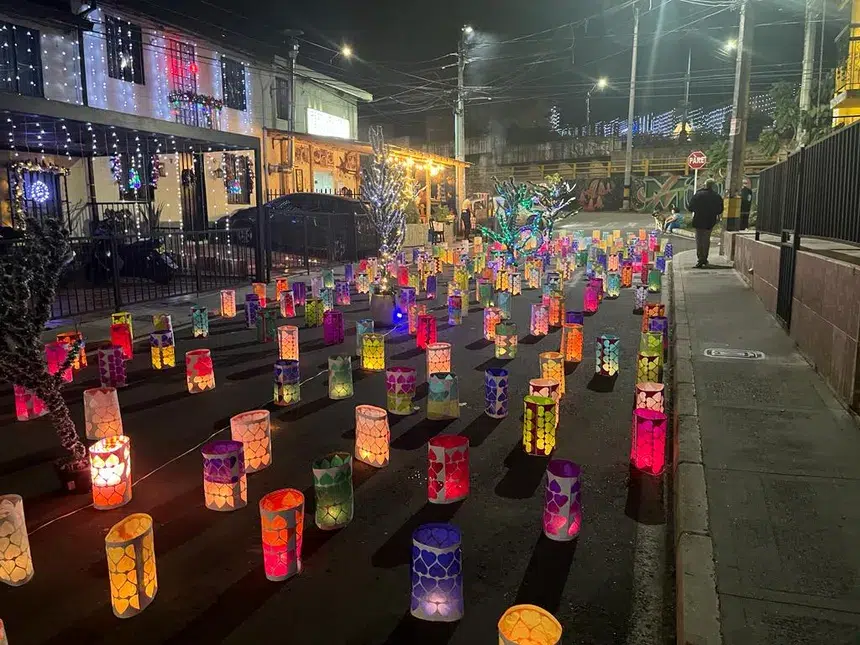
Medellín’s other signature event is the Alumbrados Navideños, the Christmas light displays strung along the Medellín River and around the city from early December into the first week of January. They are some of the most elaborate in Latin America and draw huge crowds of locals and visitors alike. December also falls in the dry season, so the weather cooperates.
The catch is the calendar. From mid-December through New Year’s is peak holiday season: prices climb, the city is busy, and New Year’s Eve in particular is a major celebration. Lovely if you want the festive energy, less ideal if you are after a quiet, cheap trip.
A Couple of Other Dates
Two more worth a mention. Semana Santa, the week before Easter (March or April), is the big domestic travel week: many paisas leave the city, some businesses close, and Medellín feels quieter than usual, though it falls in or near the wetter, hazier part of the year. And for niche interests, the city also hosts an international tango festival in June and Colombiamoda, one of Latin America’s larger fashion weeks, in late July.
What to Pack
Pack for spring, not the tropics. Light, comfortable clothes for the day, a light jacket or sweater for cool evenings and higher-altitude spots, and a packable rain jacket or a small umbrella if you are coming in the April–May or September–November rains. The thing people most underestimate is the sun: the UV is strong at this altitude and near the equator, so bring real sunscreen. For the full month-by-month breakdown and a packing list, see the Medellín weather and packing guide.
Frequently Asked Questions
What is the best month to visit Medellín? For reliable sun, aim for the dry seasons, roughly December to March or June to August. For the best atmosphere, August (the Feria de las Flores) and December (the Christmas lights) are hard to beat. For lower prices and fewer crowds, the wetter months of September to November.
Does Medellín have seasons? Not in the usual sense. Temperatures stay close to 22°C (72°F) year-round. The only real variation is between wetter and drier months.
What is the rainy season in Medellín? There are two: roughly April to May and September to November. Even then, the rain is usually a short afternoon shower rather than all-day rain.
Is August a good time to visit Medellín? Yes, if you want the energy. Early August is the Feria de las Flores, the city’s biggest festival. Just expect crowds and higher prices, and book well ahead.
When is the cheapest time to visit Medellín? Generally the wetter, lower-demand months, especially September through November, away from the December holidays and the August festival.
What is the weather like in Medellín year-round? Mild and spring-like. Daytime highs near 28°C (82°F), nights around 16 to 17°C (60°F), with the main difference month to month being how much it rains.
The short of it: come whenever your schedule allows. Time it for August or December if you want the spectacle, the wetter months if you want it cheap and quiet, and the dry stretches if you are building the trip around the outdoors. Once your dates are set, the safety guide and the things-to-do guide are the next two to read.


