Medellín and Colombia, from someone who lives here
Medellín Weather and Time Zone: What to Expect Year-Round
The quick version: Medellín stays mild throughout the year. Most afternoons are warm rather than hot, evenings are comfortable, and the main change from one month to the next is rain. Colombia uses UTC-5 all year and does not change its clocks. Pack light clothes, a thin layer for the evening, sunscreen and something for sudden rain.
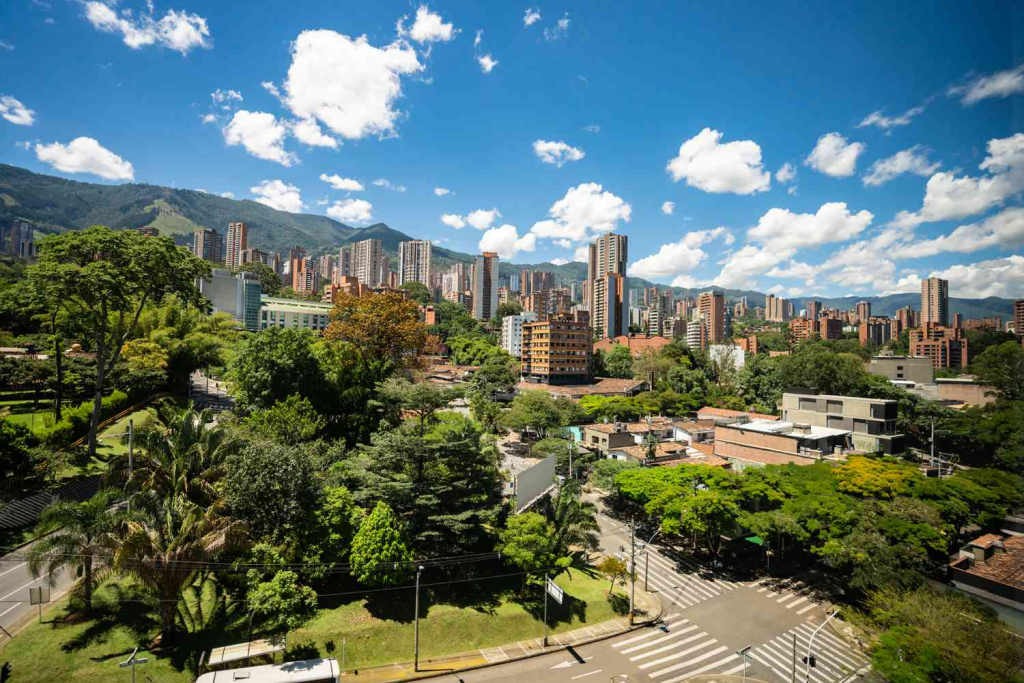
Medellín is called the City of Eternal Spring so often that it can sound like advertising. Still, the nickname is fair. I have lived here since 2018, and one of the easiest parts of daily life is not having to plan around a real winter or a punishing summer.
That does not mean every day is sunny. Medellín has two rainy seasons, and the valley can produce serious afternoon storms. The weather also changes with altitude. A warm day in Laureles can feel cool and misty by the time you reach Santa Elena or Parque Arví.
This guide explains the weather month by month, the best time to visit, what to pack and how Medellín’s time zone compares with the United States and Europe.
Table of Contents
Medellín weather at a glance
Question
Quick answer
Time zone
Colombia Time, UTC-5
Daylight saving
No. The clock stays the same all year.
Typical daytime feel
Warm and comfortable, usually in the mid-20s C
Typical evenings
Mild in the valley; cooler in the hills
Rainier periods
March to May and September to November
Drier periods
December to February and June to August
Best all-round months
January, February, June, July and early December
What people underestimate
Strong sun, sudden rain and cooler mountain areas
What time zone is Medellín in?
Medellín uses Colombia Time, which is UTC-5. The entire country uses the same time zone, and Colombia does not observe daylight saving time. Your phone should normally adjust automatically when you arrive.
The confusing part is that the time difference with other countries changes when they move their clocks. Medellín does not move; New York, London and Madrid do.
City
Difference from Medellín
New York and Miami
Same time during US winter; 1 hour ahead of Medellín during US summer
Chicago and Houston
1 hour behind Medellín during US winter; same time during US summer
Los Angeles
2 or 3 hours behind Medellín
London
5 or 6 hours ahead of Medellín
Madrid
6 or 7 hours ahead of Medellín
Lima and Quito
Same time all year
For remote workers, Medellín lines up particularly well with North American business hours. European schedules are less comfortable. A 9:00 a.m. meeting in London can begin at 3:00 or 4:00 a.m. in Medellín, depending on the season.
Why Medellín’s climate stays so steady
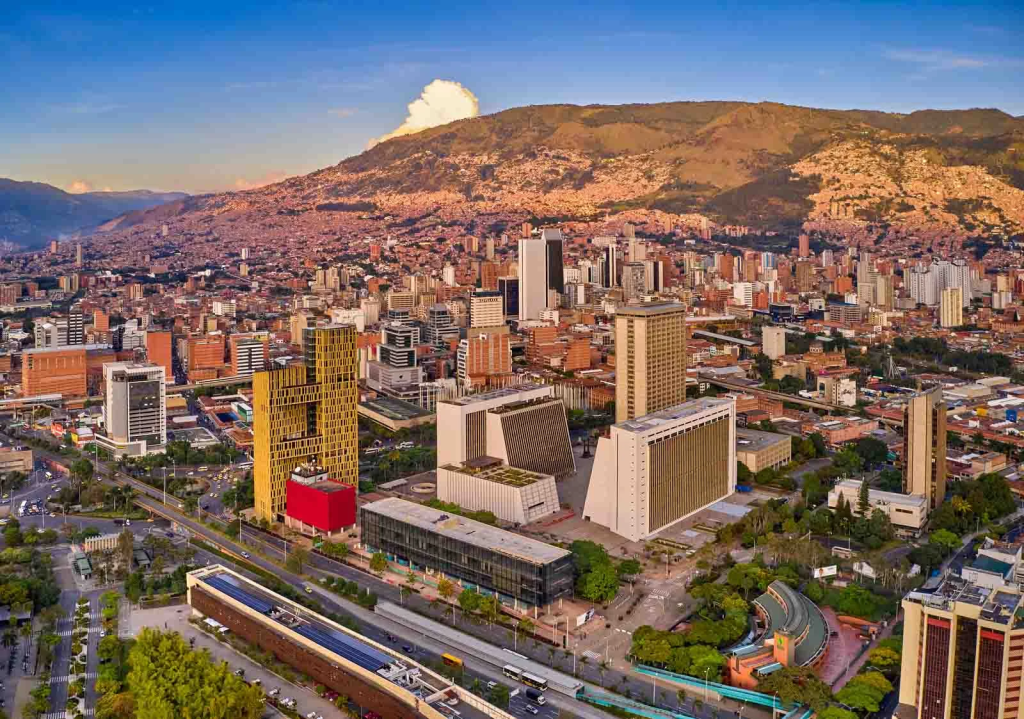
Medellín sits close to the equator, but it is also around 1,500 meters above sea level. The equatorial location keeps the length of the day and the average temperature fairly stable. The altitude prevents the city from feeling as hot as a Caribbean destination at the same latitude.
Most days in the valley feel warm without being exhausting. The sun can be strong at midday, but shade makes a noticeable difference. At night, you may want a light shirt or thin sweater, especially after rain.
The valley is not one temperature from end to end. El Poblado’s higher streets can feel cooler than the flatter western side of the city. Santa Elena and Parque Arví are higher again and can be several degrees cooler, wet and windy even when the center of Medellín is bright.
Medellín weather by month
There is no completely rain-free month. The descriptions below are a planning guide, not a promise. Tropical weather can ignore the calendar, and a dry-season week can still include a heavy storm.
Month
What the weather is usually like
What it means for your trip
January
Usually one of the drier months, with bright mornings and warm afternoons.
Excellent for sightseeing. It is also a popular travel period, so accommodation can cost more.
February
Still fairly dry and warm, with occasional showers.
A strong all-round month with fewer holiday crowds than early January.
March
Rain starts to increase. Days remain warm, but afternoon clouds become more common.
Still a good month if you keep outdoor plans flexible.
April
One of the wetter months. Heavy afternoon or evening storms are common.
Plan museums or cafés as backups. Rain rarely ruins an entire trip, but it can disrupt an afternoon.
May
Wet, green and humid, with frequent showers and thunderstorms.
Good value and lush scenery, but not the best month for a packed outdoor schedule.
June
A transition toward a drier spell, though showers still happen.
A good balance of greener landscapes and improving weather.
July
Often drier and brighter, with warm days and cooler evenings in the hills.
One of the easiest months for city walks and day trips.
August
Generally pleasant, with rain gradually becoming more frequent later in the month.
Feria de las Flores makes this a lively and busy time to visit.
September
The second rainy season begins. Afternoon storms become more regular.
Fine for city travel, but leave extra time for road trips and outdoor plans.
October
Usually among the wettest periods of the year.
Expect rain and keep plans flexible. The city is quieter than in peak travel months.
November
Still rainy, though conditions often begin to improve toward the end of the month.
A mixed month. It can be wet, but prices and crowds may be easier.
December
Rain generally eases, especially later in the month. Days are warm and evenings are lively.
Great weather and Christmas lights, but traffic, crowds and accommodation demand rise.
What rain in Medellín is actually like
Visitors often imagine a rainy season means nonstop gray days. That is not normally how Medellín works. A common pattern is a bright morning, clouds building after lunch and a hard shower later in the day. The rain can be intense enough to flood a street for a short time, then stop almost as quickly as it started.
There are exceptions. Some systems settle over the valley and bring hours of steady rain. Mountain trips are also less predictable than the city. If you are going to Parque Arví, Santa Elena or a viewpoint, check the sky before leaving and carry a layer even when the morning looks clear.
Traffic slows badly during heavy rain. A taxi trip that takes 25 minutes in dry weather can take much longer once roads are wet and everyone tries to travel at the same time. This matters most when you are heading to the airport or have a timed tour.
When is the best time to visit Medellín?
For the easiest weather, January, February, June and July are strong choices. Early December can also be excellent, especially if you want to see the city’s Christmas lights.
The best month still depends on what you want:
For mostly dry sightseeing: January, February, June or July.
For Feria de las Flores: late July or August. Book early and expect higher prices.
For Christmas lights and holiday atmosphere: December.
For greener landscapes and fewer visitors: April, May, September or October, as long as you do not mind rain.
For lower accommodation prices: look outside major holidays and city events rather than choosing only by weather.
I would not cancel a Medellín trip because it falls in a rainy month. The city still works, and many attractions are indoors or easy to reach by Metro. You simply need a less rigid schedule.
What to pack for Medellín
You do not need a separate wardrobe for each season. The same basic clothes work throughout the year.
Light shirts, shorts, skirts or breathable trousers for the day.
A thin sweater or long-sleeve shirt for evenings and higher areas.
Comfortable shoes with decent grip. Wet tiles and steep sidewalks can be slippery.
A compact umbrella or a light rain jacket.
Sunscreen, sunglasses and a hat. Cloud cover does not mean weak sun.
A refillable bottle. Medellín’s tap water is generally safe to drink.
A heavy winter coat is unnecessary for normal city travel. Bring a warmer layer only if your itinerary includes high mountain areas, very early starts or destinations such as Bogotá after Medellín.
Altitude, sun and first-day tiredness
Medellín’s altitude is noticeable without usually causing serious altitude sickness. Some visitors feel slightly tired or short of breath on steep hills during the first day. Hydration, a slower pace and a good night’s sleep normally help.
The sun is easier to underestimate. The temperature may feel gentle, but you can still burn quickly, particularly around midday. Use sunscreen even when the sky is cloudy, and take more care on open viewpoints, walking tours and day trips.
How to plan around the weather
A few simple habits make a big difference:
Put outdoor activities in the morning when possible.
Keep one indoor option nearby, such as a museum, café or shopping center.
Do not schedule a tight airport transfer after a mountain day trip.
Check SIATA for local radar and storm information rather than relying only on a generic phone forecast.
Expect different conditions in the hills. A city forecast may not describe Parque Arví accurately.
Phone weather apps often show rain every day in Medellín because there is a chance of a shower somewhere in the valley. That does not mean it will rain all day or even in the neighborhood where you are staying.
Frequently asked questions
Does Medellín have seasons?
Not in the traditional spring, summer, autumn and winter sense. Temperatures stay fairly stable. The useful distinction is between rainier and drier periods.
What is the hottest month in Medellín?
Monthly temperature differences are small. A sunny day in a drier period can feel hotter, but Medellín does not have a true hot season like Cartagena.
What is the rainiest month?
April, May, September, October and November are generally among the rainier months. The exact pattern changes from year to year.
Does it get cold at night?
Not usually in the valley. Evenings are mild, though a thin layer can be useful after rain. Higher places such as Santa Elena and Parque Arví can feel properly cool.
Does Medellín use daylight saving time?
No. Medellín stays on UTC-5 throughout the year.
Is Medellín humid?
It can feel humid, especially during rainy periods, but the altitude keeps it more comfortable than Colombia’s Caribbean coast.
Can rain cancel a trip to Guatapé or Parque Arví?
Tours often still operate in light rain. Thunderstorms, poor visibility or unsafe trail conditions can cause changes, so check with the operator before leaving.
What is the best month for Medellín?
February and July are strong all-round choices. December is excellent for the holiday atmosphere, while August is best for Feria de las Flores.
The bottom line
Medellín’s weather is one of the city’s biggest advantages. You can visit at almost any time of year without dealing with extreme heat or cold. The trade-off is rain that can arrive quickly, strong midday sun and cooler conditions in the surrounding mountains.
Choose a drier month if your trip is built around walking and outdoor day trips. Choose a rainy month if lower crowds matter more, and keep your schedule flexible. Either way, light layers, sunscreen and a small umbrella cover most situations.